

Hormones are chemical messengers. They help control metabolism, growth, reproduction, appetite, mood and many other body functions.
Your endocrine system includes glands such as the thyroid, pituitary, adrenal glands and pancreas. Reproductive organs also make hormones. According to Better Health Channel, these hormones travel through the bloodstream and help different parts of the body communicate.
So, can vitamins help with hormone balance?
There is no single vitamin that can “balance” all your hormones. However, some vitamins and minerals are needed to make hormones or support the body processes that hormones depend on.
If you want to support natural hormone balance, the best starting point is a balanced diet, healthy lifestyle and treatment of any nutrient deficiency or underlying health condition.
What Does Hormone Balance Actually Mean?
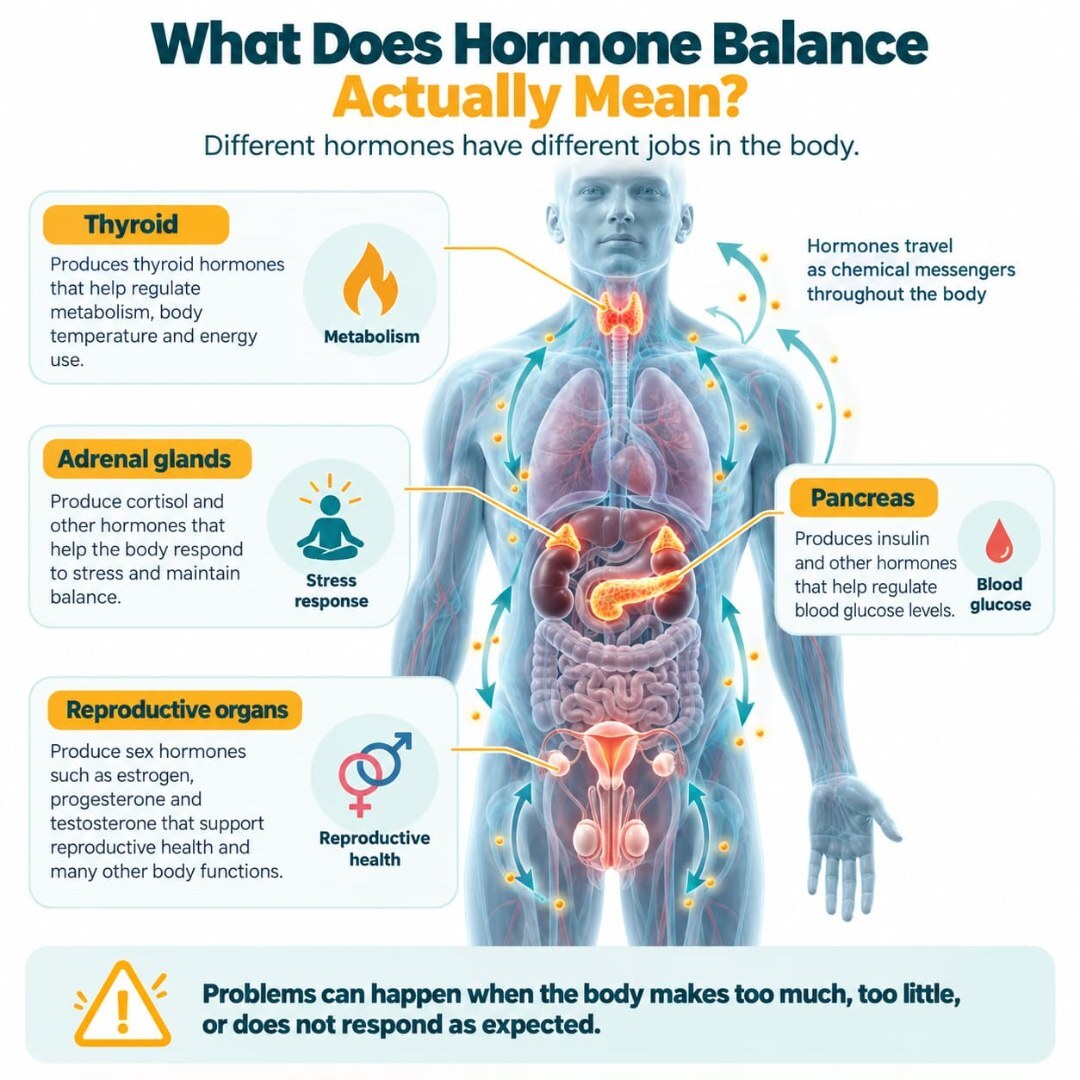
“Hormone balance” is a common phrase, but your body does not have one overall hormone level that simply becomes balanced or unbalanced.
There are many different hormones. Each has its own job.
For example, thyroid hormones help control metabolism. Insulin helps manage blood glucose. Oestrogen, progesterone and testosterone are involved in reproductive health and many other body functions.
Hormone-related problems may happen when your body makes too much or too little of a particular hormone. They can also happen when the body does not respond to a hormone as expected.
Conditions linked with hormone changes include thyroid disorders, diabetes and polycystic ovary syndrome (PCOS), now also called polyendocrine metabolic ovarian syndrome (PMOS) in updated terminology.
This is why taking a supplement based only on symptoms is not always helpful. The correct treatment depends on which hormone or body system is affected.
A doctor may recommend blood tests or other checks if your symptoms suggest an endocrine condition.
Which Vitamins and Minerals Support Normal Hormone Function?
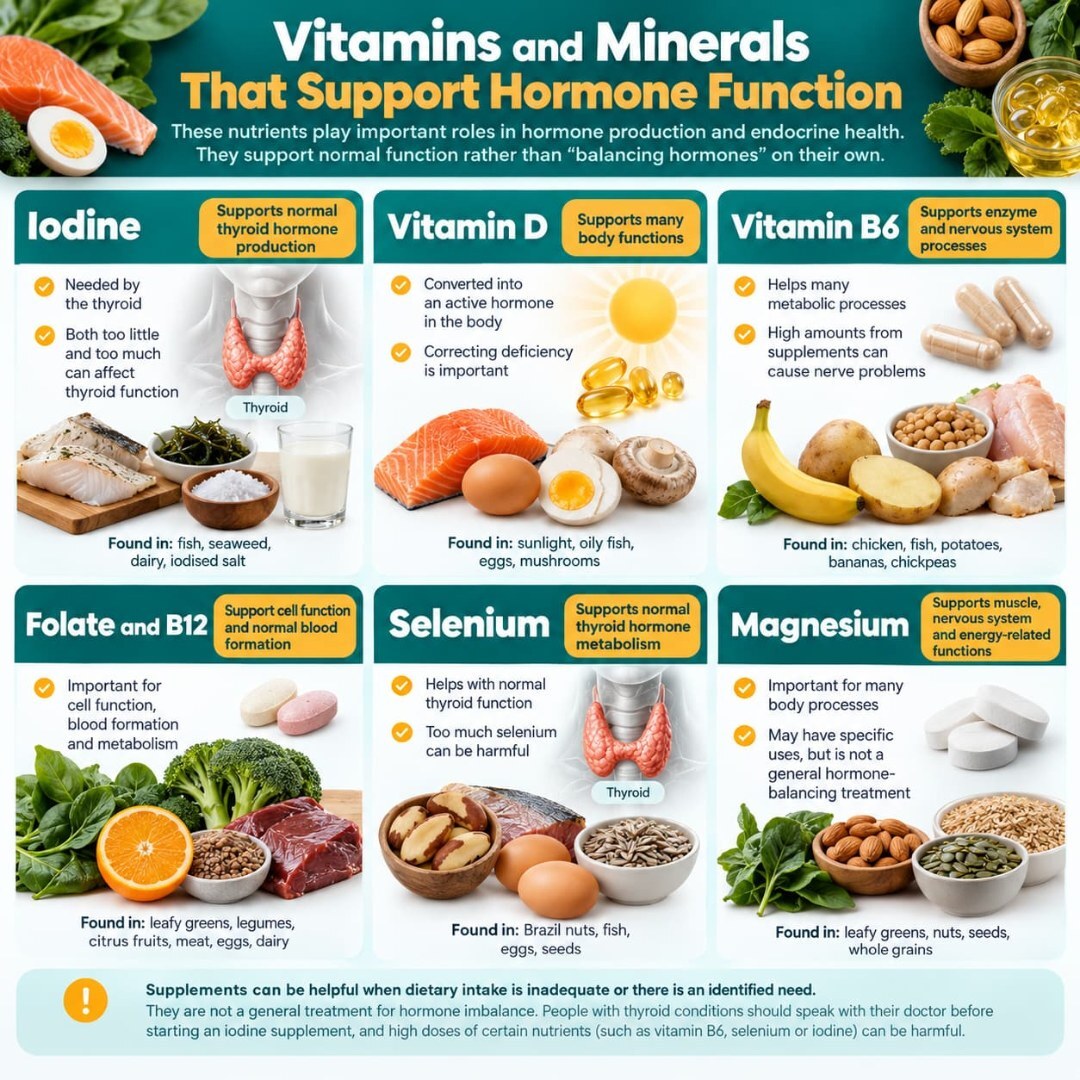
Several vitamins and minerals are important for normal hormone production and endocrine function.
You can browse MedCart's Vitamins & Minerals range or use the nutrient links below to explore relevant supplements.
However, taking more of a nutrient does not automatically improve hormone balance. Supplements are generally most useful when dietary intake is inadequate or there is another identified need.
Iodine and thyroid hormones
Iodine supplements have one of the clearest links with hormone production.
Healthdirect Australia explains that your thyroid needs iodine to produce thyroid hormones. These hormones help regulate metabolism and are also important for normal growth and development.
Most Australian adults need around 150 micrograms of iodine each day.
More iodine is not necessarily better. Healthdirect notes that excessive iodine can also affect thyroid function and may contribute to hypothyroidism or hyperthyroidism.
People with thyroid conditions should speak with their doctor before starting an iodine supplement.
Vitamin D
Vitamin D supplements may be recommended when a person has low vitamin D levels.
Vitamin D is unusual because the body activates it into a hormone. Healthdirect says vitamin D is important for calcium absorption, bones, muscles and several other body functions.
Research has also looked at vitamin D supplementation in people with PCOS. A 2024 umbrella review of clinical trials reported changes in some hormone and cholesterol measures. However, results were not consistent across all outcomes.
This means vitamin D should not be considered a general treatment for hormone imbalance or PCOS.
B vitamins
B6 supplements, vitamin B12 supplements and folate supplements support normal nutritional functions, but they do not directly “reset” hormone levels.
Vitamin B6 deserves extra care. The Therapeutic Goods Administration (TGA) warns that vitamin B6 from supplements can cause peripheral neuropathy in some people. Symptoms can include tingling, burning or numbness.
The risk can also increase when several supplements containing vitamin B6 are taken together.
Selenium and magnesium
Selenium supplements may be relevant to thyroid nutrition because selenium is involved in normal thyroid hormone metabolism. However, taking high amounts is not recommended without a clear reason.
Magnesium supplements support normal muscle, nerve and energy-related functions. Magnesium has also been studied for some premenstrual symptoms.
Neither selenium nor magnesium should be treated as a general solution for hormone imbalance.
What Are the 5 Signs of Hormonal Imbalance?
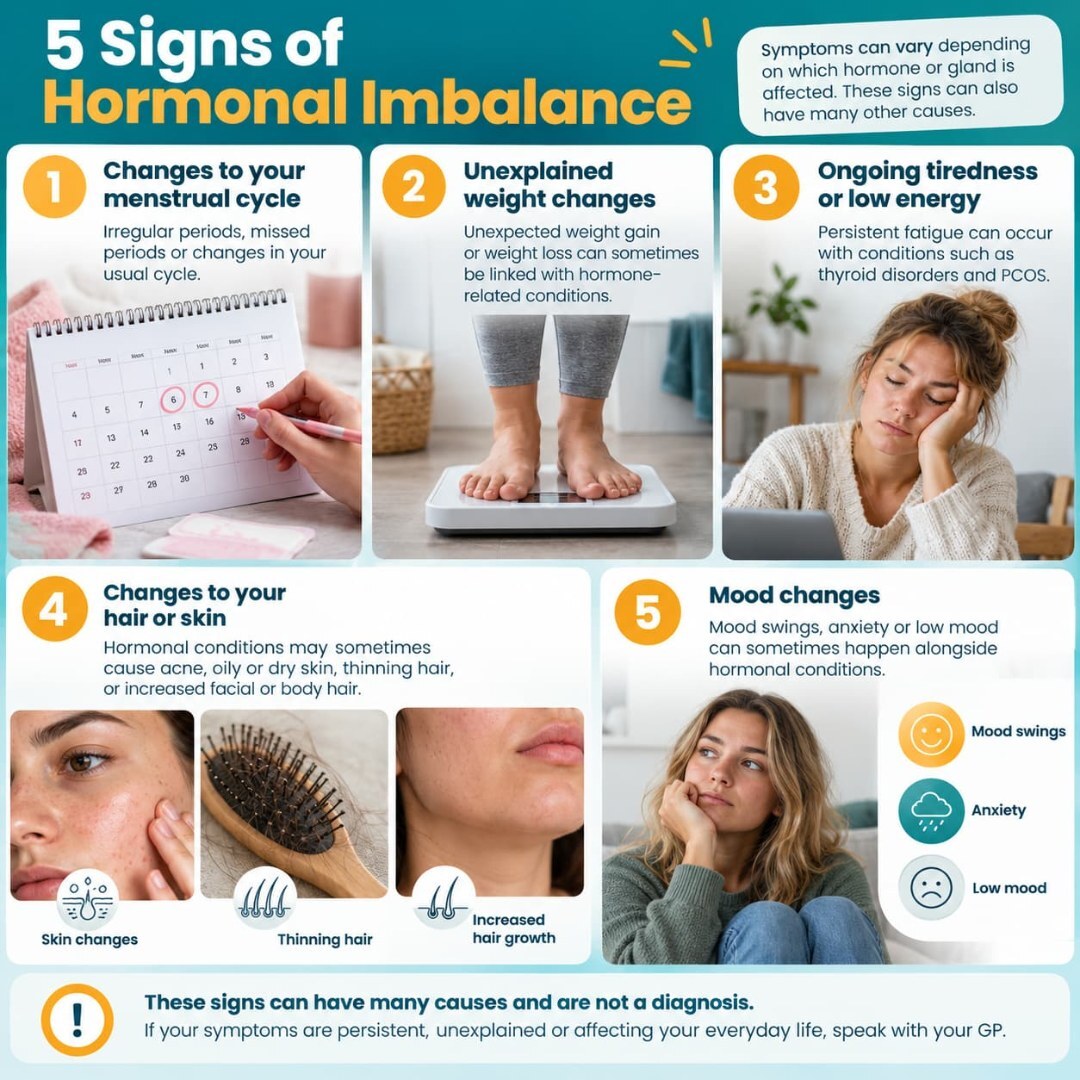
There is no single set of symptoms that confirms a hormonal imbalance. Symptoms vary depending on which hormone or gland is affected.
However, hormone-related conditions such as thyroid disorders and PCOS can cause several noticeable changes.
Here are five possible signs.
1. Changes to your menstrual cycle
Irregular periods, missed periods or noticeable changes in your normal menstrual cycle can sometimes occur with hormone-related conditions.
Healthdirect lists irregular or missed periods as a common symptom of PCOS.
2. Unexplained weight changes
Unexpected weight gain or weight loss can sometimes be linked with thyroid or metabolic conditions.
However, body weight can change for many other reasons, including diet, activity, medicines and other health conditions.
3. Ongoing tiredness or low energy
Persistent fatigue can occur with conditions such as hypothyroidism and PCOS.
Tiredness is also extremely common and does not automatically mean there is a hormone problem.
4. Changes to your hair or skin
Hormonal conditions may sometimes cause acne, oily skin, dry skin, thinning hair or increased facial or body hair.
Healthdirect lists acne, increased hair growth and thinning scalp hair among possible symptoms of PCOS.
5. Mood changes
Mood swings, anxiety or low mood can sometimes happen alongside hormonal conditions.
However, mood changes have many possible causes. Hormone testing may not always be needed.
If these changes are persistent, unexplained or affecting your everyday life, speak with your GP.
Symptoms alone cannot diagnose a hormonal condition.
Should You Take Supplements for Hormone Balance?
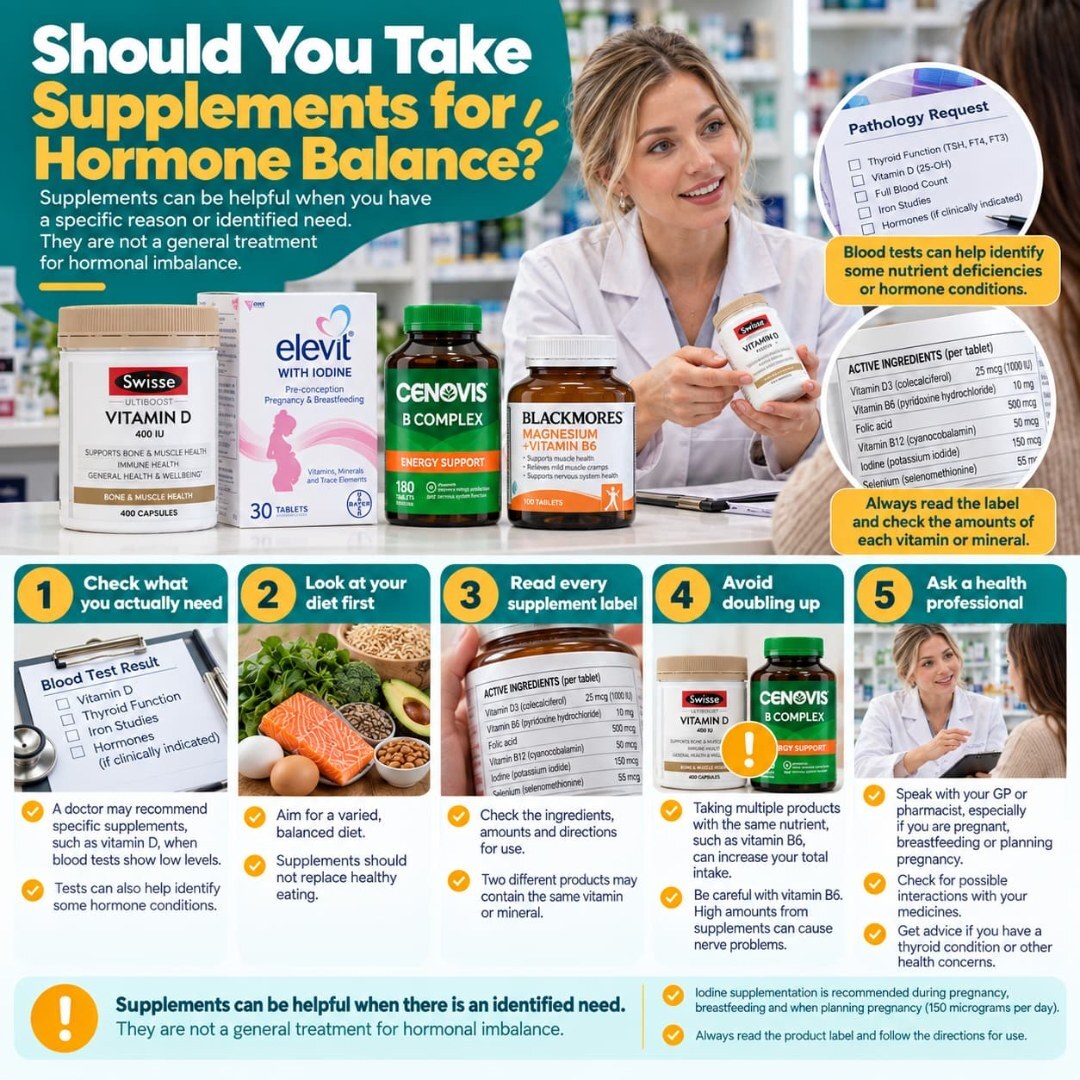
A supplement is more likely to be useful when there is a specific reason that you need more of a nutrient.
For example, Healthdirect says a doctor may recommend vitamin D supplements when blood tests show that vitamin D levels are low.
Australian guidance also recommends iodine supplementation during pregnancy, breastfeeding and when planning pregnancy. The National Health and Medical Research Council recommends 150 micrograms of supplemental iodine per day during these stages. People with existing thyroid conditions should seek medical advice first.
Before choosing supplements, consider these points:
- Check what you actually need. Blood tests may help identify some nutrient deficiencies or hormone conditions.
- Look at your diet first. Supplements should not replace a varied, balanced diet.
- Check every supplement label. Two different products may contain the same vitamin or mineral.
- Be careful with vitamin B6. Multiple products containing B6 can increase your total intake.
- Do not take extra iodine just to “balance hormones”. Too much iodine can also affect thyroid function.
- Ask for advice if you take medicines. Some supplements can interact with medicines or may not be suitable for certain conditions.
- Speak with a healthcare professional during pregnancy or breastfeeding. Nutritional needs can change during these stages.
You can browse MedCart's Vitamins & Minerals range to compare different vitamin and mineral supplements.
Always read the product label and follow the directions for use.
FAQs
Can a multivitamin balance your hormones?
There is no good evidence that a standard multivitamin can generally “balance” hormones.
A multivitamin may help provide nutrients when dietary intake is inadequate, but a diagnosed hormone disorder may need specific treatment.
You can browse multivitamins available on MedCart if you are looking for general nutritional supplementation.
Is vitamin D good for hormone balance?
Vitamin D has important functions in the body and is converted into an active hormone.
If you have vitamin D deficiency, correcting it can be important for your health. However, taking vitamin D when you do not need it has not been shown to generally “balance” all hormones.
Browse vitamin D supplements on MedCart.
Does magnesium help hormone balance?
Magnesium is an essential mineral involved in many normal body processes.
Research has examined magnesium for specific concerns such as premenstrual symptoms, but this is different from saying magnesium balances hormones in general.
Browse magnesium supplements on MedCart.
Is iodine good for hormone balance?
Iodine is directly involved in thyroid hormone production.
However, people who already get enough iodine do not necessarily benefit from taking more. Excess iodine can also interfere with thyroid function.
Browse iodine supplements on MedCart.
Should I get tested before taking supplements?
Testing is not required before taking every vitamin or mineral supplement.
However, if you have persistent symptoms that could relate to thyroid disease, PCOS, vitamin D deficiency or another health condition, seeing a healthcare professional can help identify the cause before you start self-treating with supplements.
Summary
There is no single vitamin that can balance all your hormones.
Nutrients including iodine, vitamin D, vitamin B6, folate, vitamin B12, selenium and magnesium all have important roles in normal body function.
Iodine has a particularly direct connection because your thyroid needs it to make thyroid hormones. Vitamin D is also converted into an active hormone in the body.
However, more is not always better.
Supplements are generally most useful when your diet does not provide enough of a nutrient or when a healthcare professional identifies a specific need.
Persistent changes in your periods, weight, energy, skin, hair or mood should be discussed with a healthcare professional rather than treated with supplements alone.
Where to Buy Vitamins and Supplements
MedCart Australia offers a wide range of vitamins, minerals and nutritional supplements from different brands and sellers.
Browse:
- Vitamins & Minerals
- Iodine supplements
- Vitamin D supplements
- Vitamin B6 supplements
- Vitamin B12 supplements
- Folate supplements
- Selenium supplements
- Magnesium supplements
Visit MedCart Australia to explore the full range.
Always read the label and follow the directions for use. Vitamin and mineral supplements should not replace a balanced diet. Speak with your doctor or pharmacist if you have a medical condition, take medicines, are pregnant or breastfeeding, or are unsure whether a supplement is suitable for you.
References
- Better Health Channel, Victorian Government. Hormonal (endocrine) system. Publication date not stated. https://www.betterhealth.vic.gov.au/health/conditionsandtreatments/hormonal-endocrine-system
- Healthdirect Australia. Iodine and your health. Last reviewed April 2025. https://www.healthdirect.gov.au/iodine
- Healthdirect Australia. Iodine deficiency. Last reviewed April 2025. https://www.healthdirect.gov.au/iodine-deficiency
- Healthdirect Australia. Foods high in iodine. Publication date not stated. https://www.healthdirect.gov.au/foods-high-in-iodine
- Healthdirect Australia. Vitamin D and your health — sources of vitamin D. Publication date not stated. https://www.healthdirect.gov.au/vitamin-d-and-your-health
- Healthdirect Australia. Vitamin D deficiency. Last reviewed February 2026. https://www.healthdirect.gov.au/vitamin-d-deficiency
- Healthdirect Australia. Polycystic ovarian syndrome (PCOS). Updated information includes the May 2026 PCOS to PMOS terminology change. https://www.healthdirect.gov.au/polycystic-ovarian-syndrome-pcos
- National Health and Medical Research Council (NHMRC). Iodine Supplementation for Pregnant and Breastfeeding Women. 2010; current NHMRC guidance. https://www.nhmrc.gov.au/about-us/publications/iodine-supplementation-pregnant-and-breastfeeding-women
- Therapeutic Goods Administration. Peripheral neuropathy with supplementary vitamin B6 (pyridoxine). Published 4 October 2022; updated 25 February 2026. https://www.tga.gov.au/news/safety-updates/peripheral-neuropathy-supplementary-vitamin-b6-pyridoxine
- Yin T, Lin W, Ming K, et al. Effect of vitamin D supplementation on lipid profile, and hormonal functions in polycystic ovary syndrome: An umbrella systematic review and meta-analysis. Prostaglandins & Other Lipid Mediators. December 2024;175:106913. https://pubmed.ncbi.nlm.nih.gov/39389530/
- Cochrane KM, Bone JN, Williams BA, Karakochuk CD. Optimizing vitamin D status in polycystic ovary syndrome: a systematic review and dose-response meta-analysis. Nutrition Reviews. September 2024;82(9):1176–1186. https://pubmed.ncbi.nlm.nih.gov/37769789/
- MedCart Australia. Vitamins & Minerals. Accessed September 2026. https://medcart.com.au/beauty-and-wellness/vitamins-and-lifestyle-supplements/vitamins-and-minerals/