

You finish your makeup, look in the mirror and notice dry spots around your nose, uneven colour on your cheeks or foundation that seems to slide away. Why does foundation look patchy even when you use a good product?
Patchiness is often a mix of skin condition, product layers and application. It does not always mean your foundation is bad. It also does not mean you need a heavier coat. In many cases, using less makeup and taking more care with skin preparation can improve how it looks.
Here are seven common causes, what to try first and when to consider changing the formula. These are cosmetic tips, not treatment advice for eczema, acne or another skin condition.
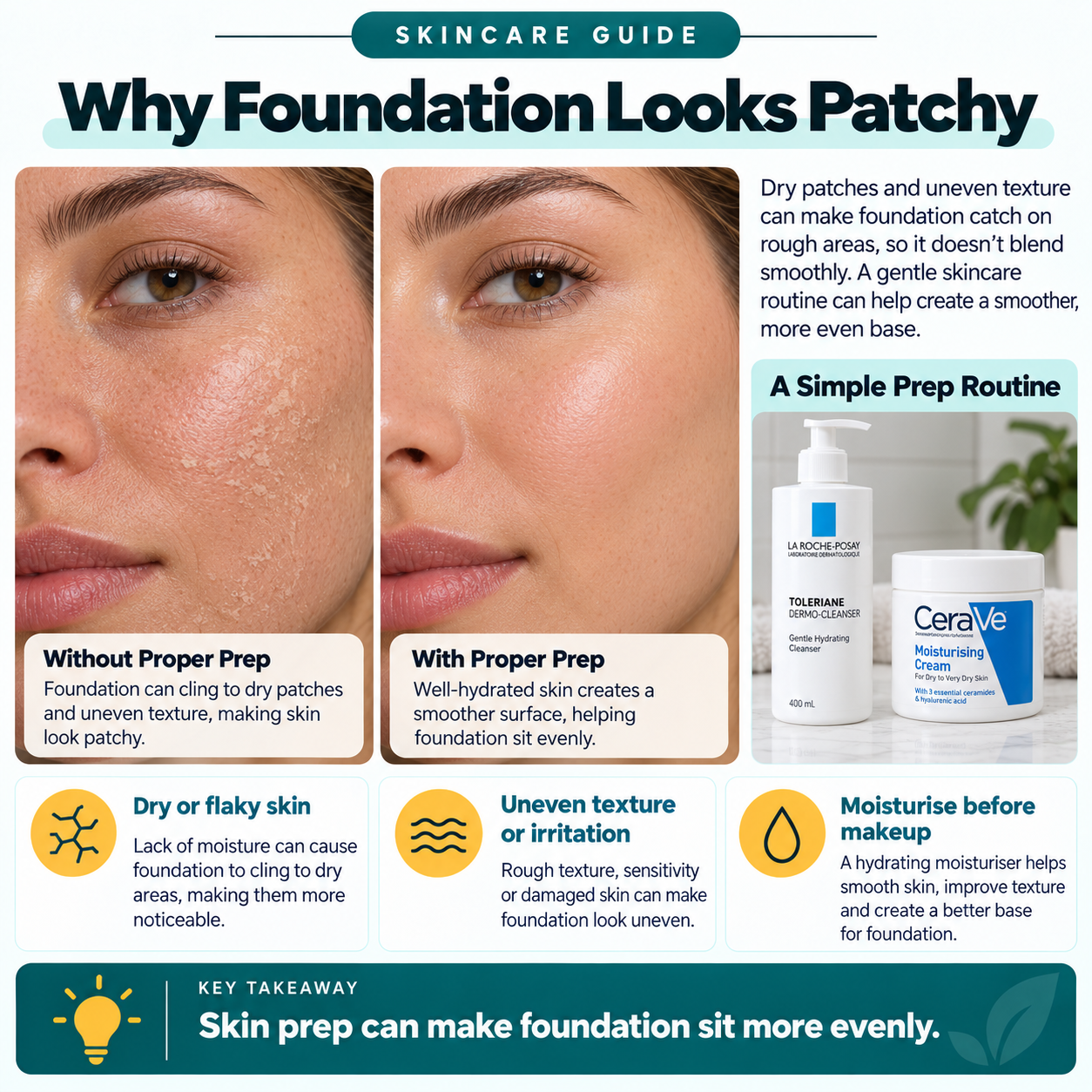
Causes 1–2: Dry Patches and Skin Texture
1. Skin is dry or flaky
Foundation sits on top of skin. If the surface has dry flakes, pigment can catch around their edges. This creates pale patches, fine lines or a powdery finish. Even a foundation sold as hydrating may highlight flakes if the skin underneath feels tight.
The American Academy of Dermatology (AAD) advises applying moisturiser to slightly damp skin to help hold moisture in. A simple, suitable moisturiser can therefore be a useful step before makeup. Wait until it feels settled rather than putting foundation onto a wet or slippery layer.
2. Skin is uneven or irritated
Acne bumps, dry areas and rough skin all change how makeup sits. Scrubbing them before applying foundation can make irritation worse. If your face stings, burns or has a rash, cover-up products may add discomfort rather than solve the cause.
Healthdirect describes contact dermatitis as skin inflammation that may be triggered by substances touching the skin. If you suspect a product reaction, stop using the possible trigger and seek advice if it does not improve.
What to try: use a gentle cleanse, moisturise, then apply a thin layer of makeup. Avoid picking flakes or rubbing with a rough towel. A small amount of foundation used only where you want coverage can look more even than a thick full-face layer.
You can also read MedCart's guide to skin types to learn why oily and dry areas may need different care.
Causes 3–4: Too Many Layers or Too Much Product
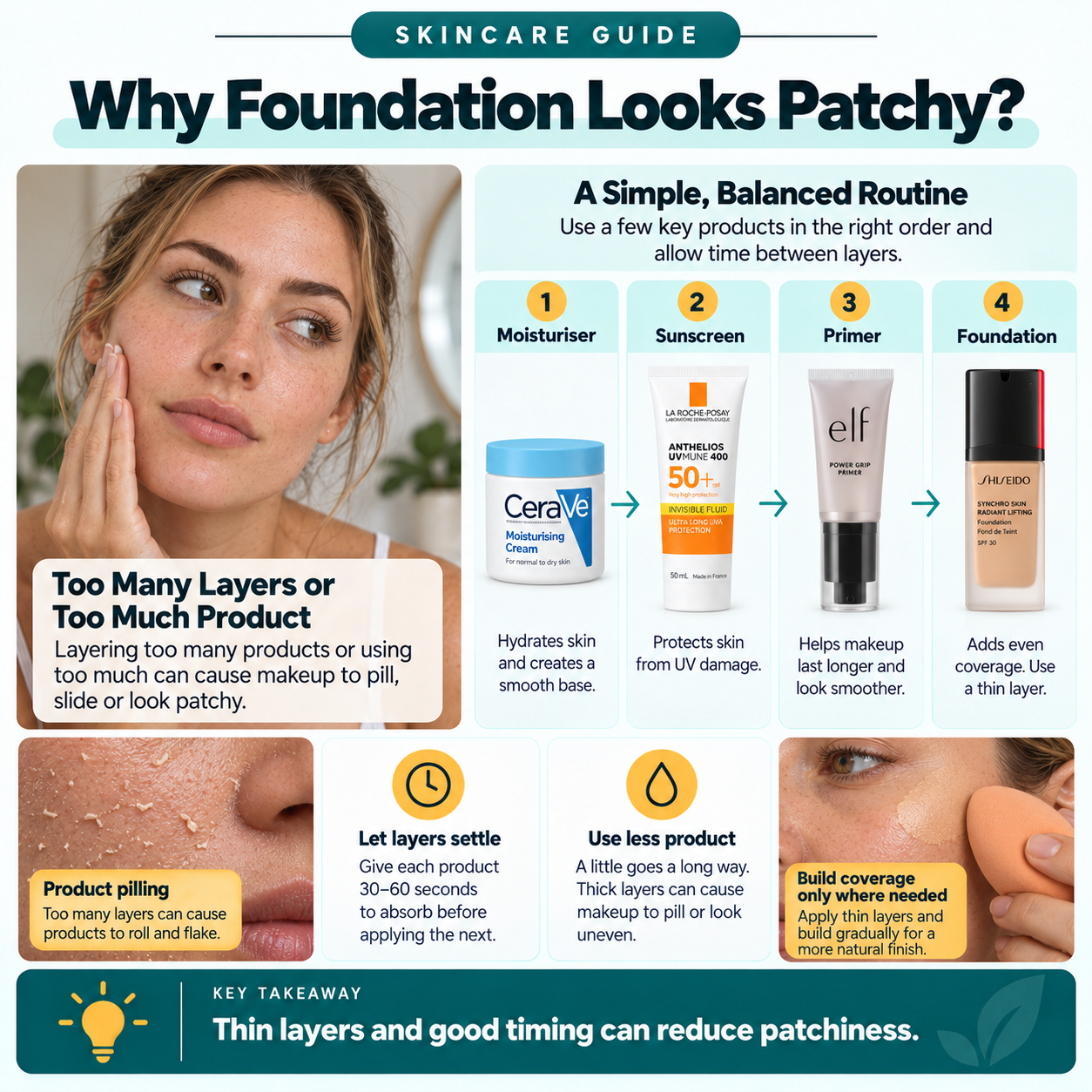
3. Skincare layers have not settled
A rich moisturiser, sunscreen, primer and liquid foundation may each leave a different finish. If you rub them together straight away, the layers can lift or form tiny rolls. This is often called pilling. It may look like dry skin, but the small flakes are sometimes the products themselves.
Try a simpler routine. Apply skincare in a sensible order, use the amounts needed for each product and let layers settle before adding the next. Do not reduce sunscreen below its recommended amount to make makeup work. Instead, consider a compatible makeup product or adjust the time between steps.
4. The foundation layer is too thick
More foundation does not always mean more coverage. A heavy coat can gather beside the nose, mouth or smile lines. It may also separate where oil builds up during the day. Start with a small amount and build only where needed.
A useful method is to blend a thin first layer from the centre of the face outward. Let it settle. If a dark mark still shows, add a little product to that exact area rather than another full coat.
If you use powder, focus on areas that get shiny. A large amount of powder over a dry patch can leave it looking more textured.
Quick check: if the patchiness appears as soon as makeup goes on, look at skin texture and layering first. If it develops after hours, think about oil, rubbing or wear instead.
Causes 5–6: Oil, Tools and Application Method
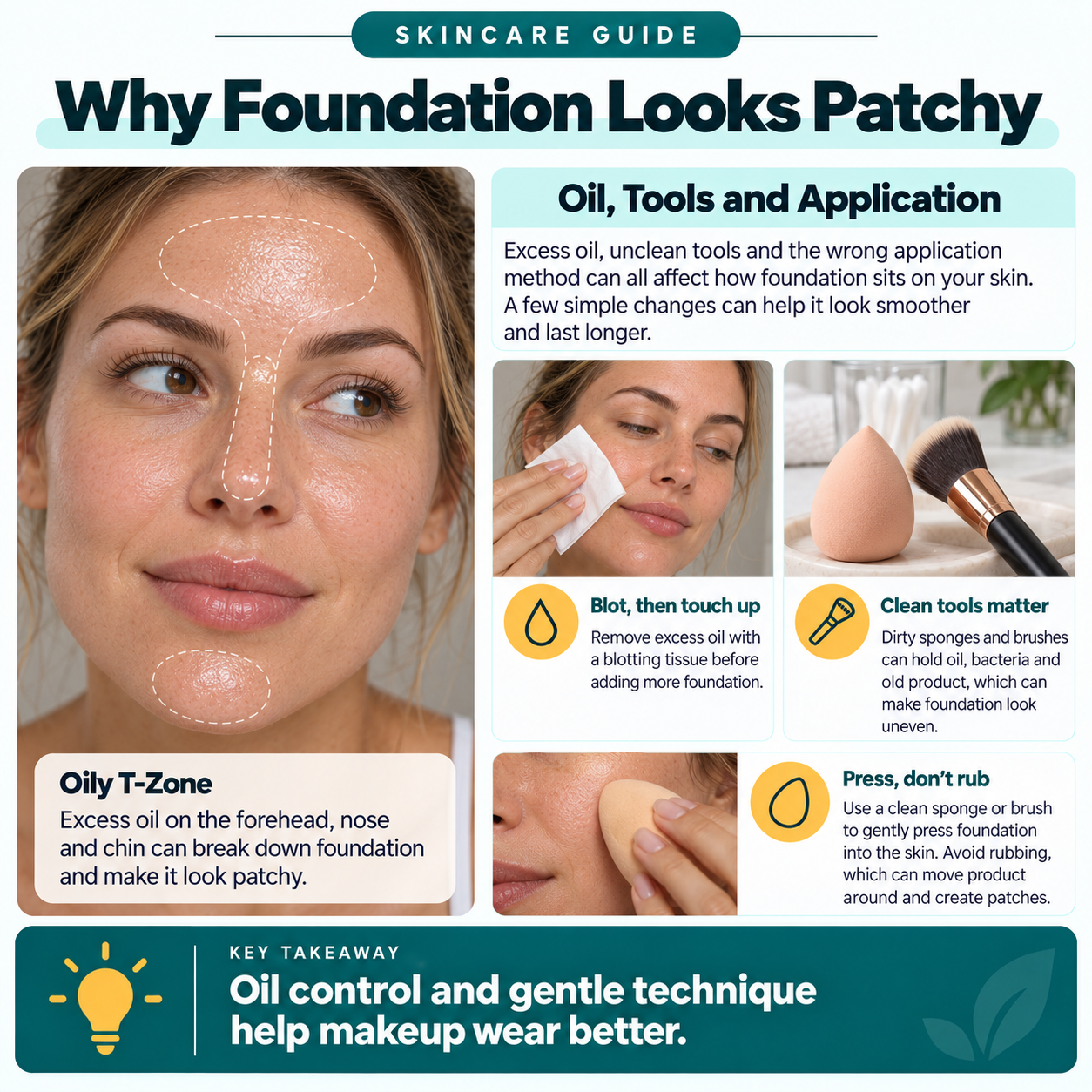
5. Oil breaks through during the day
Skin makes oil naturally. In people with an oily T-zone, foundation may wear away on the nose, forehead and chin before the cheeks. The AAD suggests choosing skincare and makeup labelled non-comedogenic when pores or acne are a concern. A formula that suits your skin may sit more comfortably through the day.
Instead of adding powder onto damp sweat, let your skin cool and gently blot extra moisture first. Then touch up only where needed. This may avoid the thick, cakey look that comes from repeated layers.
6. Your brush or sponge changes the finish
A stiff brush moved back and forth may lift foundation over dry texture. A sponge used with light tapping may create a different finish. Neither tool is always best; technique and cleanliness matter more than the label on the tool.
The US Food and Drug Administration (FDA) recommends keeping cosmetic tools and containers clean and not sharing makeup. Old or dirty applicators can introduce germs. Wash reusable tools according to their instructions and let them dry fully.
Try pressing rather than rubbing around the nose and dry areas. Use a clean finger or small brush for a tiny spot of concealer. Do not blend until the skin turns red.
Finally, check your lighting. Harsh overhead light may exaggerate texture, while dim light may hide uneven blending. Natural daylight can help you spot areas to soften.
Cause 7: The Formula Does Not Suit Your Skin
7. Foundation finish and skin needs do not match
A very matte foundation might settle into dry areas. A rich, dewy formula might feel slippery on a very oily face. Texture, finish and coverage all matter. A higher price does not guarantee a better result.
To compare makeup finishes, browse the Shiseido face makeup range at MedCart. Foundation formulas may offer matte, satin or glowy finishes. No one shade, texture or finish suits everyone. Check your undertone, ingredients and current availability before making a choice.
Some foundations carry an SPF label. Follow Cancer Council advice for dedicated sunscreen and other sun protection. A small makeup layer is not a substitute for applying sunscreen as directed.
For more on choosing cosmetic products carefully, read MedCart's guide to makeup for your skin.
FAQs
Why does my foundation separate on my nose?
Oil, rubbing, sweat or too many layers can cause the makeup to shift. Try gentle blotting and a small touch-up instead of piling on more.
Should I exfoliate before applying makeup?
Not as a quick fix. Too much exfoliation can leave skin irritated. See MedCart's exfoliation comparison for a gentler overview.
Does expensive foundation last longer?
Not necessarily. Formula, skin prep, amount applied and daily activity often matter more than price.
Summary
Patchy makeup can come from dry skin, skin texture, rushed skincare, thick layers, oil, application tools or a mismatched formula. Change one thing at a time. Keep tools clean and skin comfortable. If products repeatedly sting or trigger a rash, seek a professional opinion rather than hiding the problem under more makeup.
Where to Buy
At MedCart Australia, explore the Shiseido face makeup collection to compare foundation shades, textures and finishes across a product range. Check colour descriptions and formula details, and confirm stock before ordering.
References
- American Academy of Dermatology Association. Skin care on a budget. https://www.aad.org/public/everyday-care/skin-care-basics/care/skin-care-budget. Publication date not stated.
- American Academy of Dermatology Association. What can treat large facial pores? https://www.aad.org/public/everyday-care/skin-care-secrets/face/treat-large-pores. Publication date not stated.
- U.S. Food and Drug Administration. Microbiological Safety and Cosmetics. https://www.fda.gov/cosmetics/potential-contaminants-cosmetics/microbiological-safety-and-cosmetics. Publication date not stated.
- U.S. Food and Drug Administration. Shelf Life and Expiration Dating of Cosmetics. https://www.fda.gov/cosmetics/cosmetics-labeling/shelf-life-and-expiration-dating-cosmetics. Publication date not stated.
- Healthdirect Australia. Contact dermatitis. https://www.healthdirect.gov.au/contact-dermatitis. Last reviewed August 2024.
- Cancer Council Australia. All about sunscreen: 101 basics. https://www.cancer.org.au/cancer-information/causes-and-prevention/sun-safety/sunscreen/basics. Publication date not stated.
- MedCart Australia. Face Makeup: Shiseido range (category listing; merchandise context only). https://medcart.com.au/beauty-and-wellness/makeup/face-makeup/#/filter:seller:Fresh$2520Beauty$2520Co./filter:brand:Shiseido. Publication date not stated.