
Bacteria are tiny organisms found almost everywhere. Many bacteria are harmless, and some are helpful. Others can enter the body, multiply and cause illness.
Bacterial diseases can affect the throat, lungs, stomach, skin, nervous system and other parts of the body. They also spread in different ways. Some travel through the air. Others spread through food, water, sexual contact, wounds or ticks.
This guide introduces 10 well-known bacterial diseases and explains how prevention, testing and supportive care may help. Some, such as strep throat, are familiar in Australia. Others, including cholera, typhoid fever and Lyme disease, are uncommon locally or more often linked with overseas travel. (Healthdirect)
Medical information disclaimer: This article is for general information only. It does not replace medical advice, diagnosis or treatment. Some bacterial infections need prescription medicines or urgent medical care.
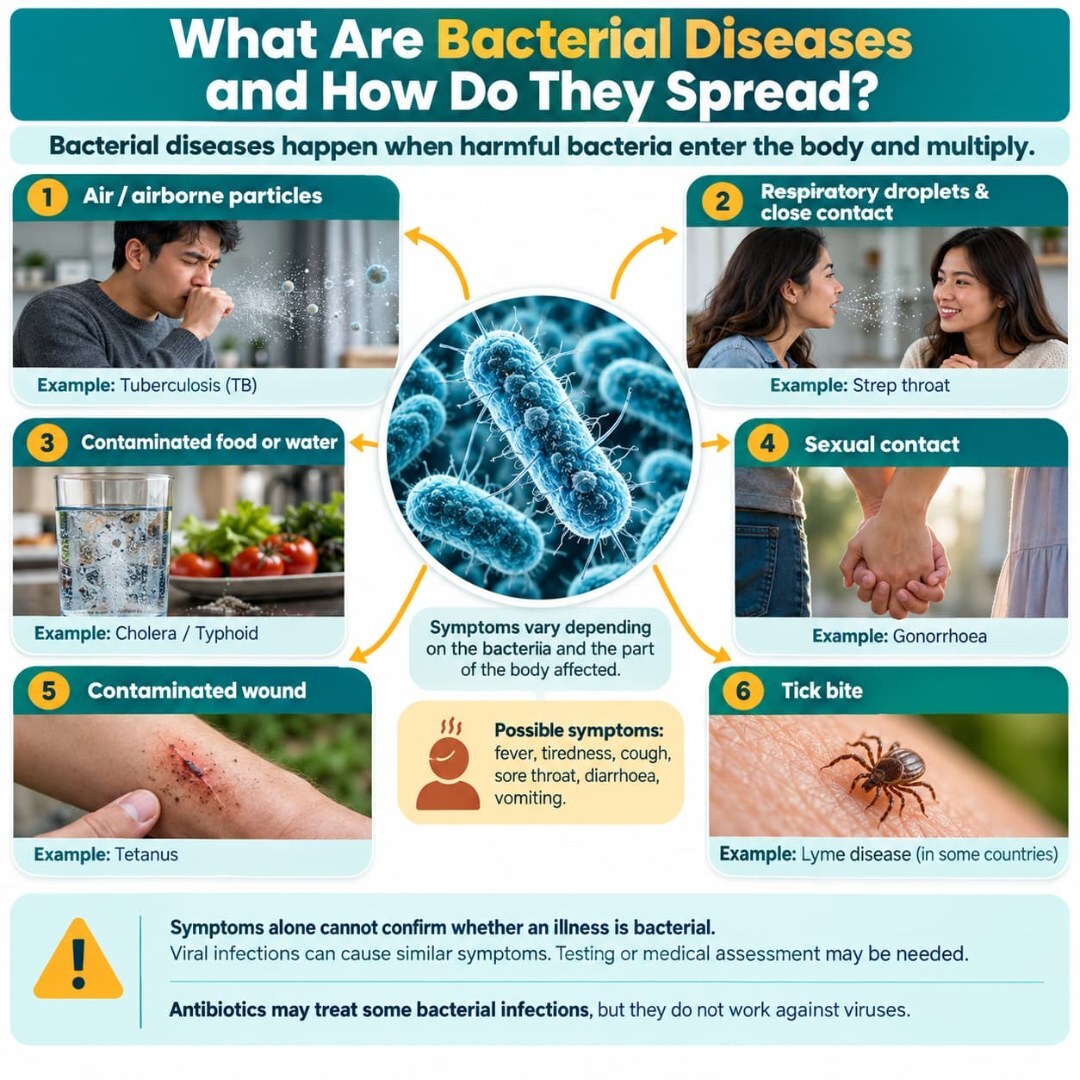
What Are Bacterial Diseases and How Do They Spread?
A bacterial disease develops when harmful bacteria enter the body and multiply. Symptoms depend on the bacteria and the part of the body affected. Healthdirect Australia lists possible symptoms such as fever, tiredness, headache, muscle aches, diarrhoea, vomiting, cough and sore throat. (Healthdirect)
Bacteria can spread in several ways:
- Through the air or respiratory particles: such as tuberculosis.
- Through respiratory droplets and close contact: such as strep throat.
- Through contaminated food or water: such as cholera and typhoid.
- Through sexual contact: such as gonorrhoea.
- Through contaminated wounds: such as tetanus.
- Through tick bites: such as Lyme disease in countries where the bacteria are present.
Symptoms alone cannot always tell you whether an illness is bacterial. Viral infections can cause many of the same symptoms. A healthcare professional may need to examine you or arrange testing. Antibiotics may treat some bacterial infections, but they do not work against viruses and should be used as directed by a healthcare professional. (Healthdirect)
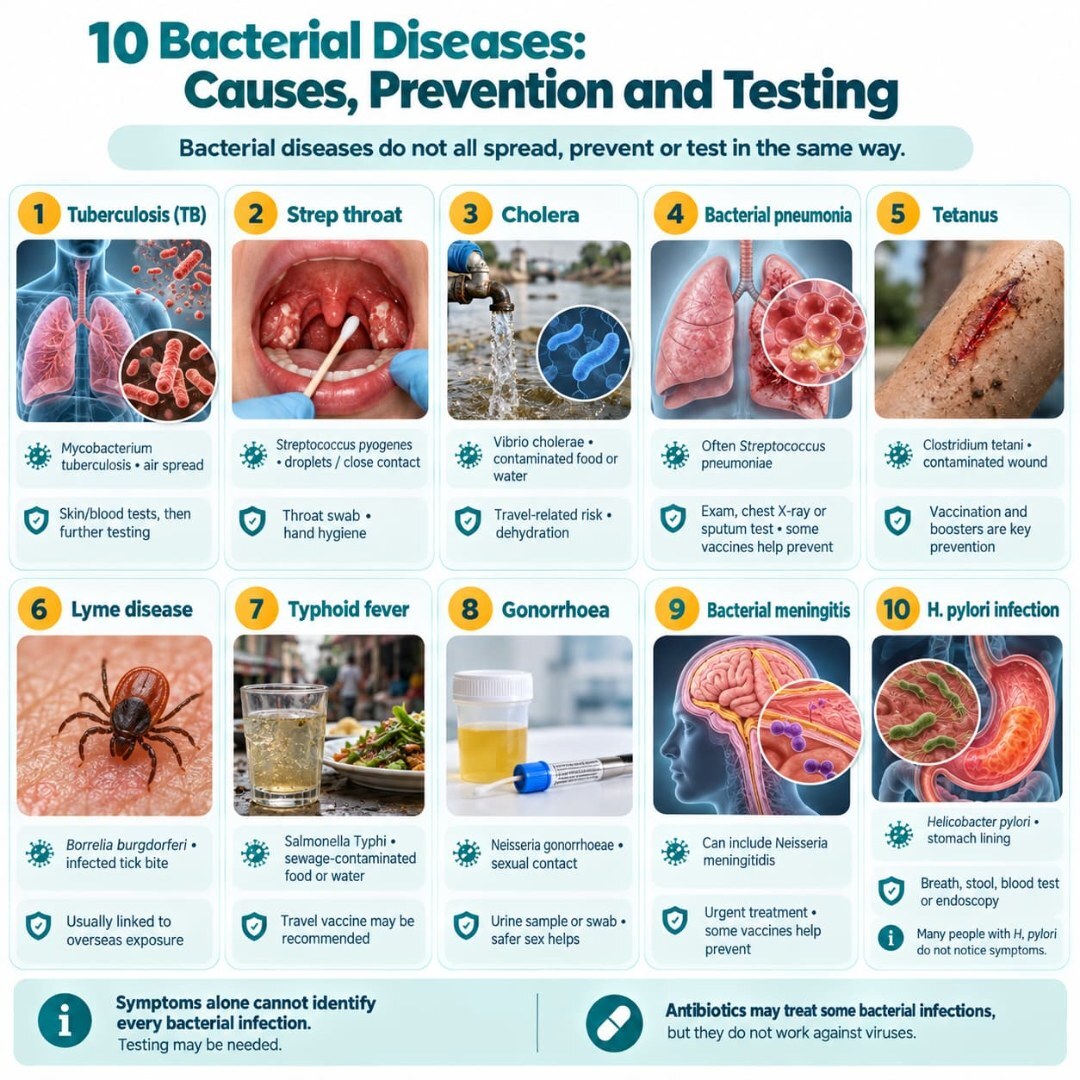
10 Bacterial Diseases: Causes, Prevention and Testing
These examples show why bacterial diseases cannot all be prevented, tested or managed in the same way.
| Disease | What causes it? | Prevention and testing |
|---|---|---|
| 1. Tuberculosis (TB) | Mycobacterium tuberculosis | Usually affects the lungs and can spread through the air when someone has infectious pulmonary TB. Skin or blood tests may check for TB infection, followed by further testing when needed. TB requires medical treatment with antibiotics. (Healthdirect) |
| 2. Strep throat | Streptococcus pyogenes | Spreads mainly through respiratory droplets and close contact. A doctor may take a throat swab. Hand hygiene, cough etiquette and avoiding close contact while infectious can help reduce spread. (Healthdirect) |
| 3. Cholera | Vibrio cholerae | Usually linked with contaminated food or water. It can cause severe watery diarrhoea and dehydration. Cholera is rare in Australia and is more often associated with travel to areas with poor sanitation. (Healthdirect) |
| 4. Bacterial pneumonia | Often Streptococcus pneumoniae | Pneumonia affects the small air sacs of the lungs. Diagnosis may involve an examination, chest X-ray, blood test or sputum test. Vaccination can prevent some forms. (Healthdirect) |
| 5. Tetanus | Clostridium tetani | Bacteria can enter through an open or contaminated wound. Vaccination and booster doses are the main prevention measures. Tetanus is uncommon in Australia because of vaccination. (Healthdirect) |
| 6. Lyme disease | Borrelia burgdorferi | Spread through infected ticks in countries where Lyme disease occurs. Healthdirect says these bacteria have not been found in Australian ticks. Australian cases may involve overseas exposure. (Healthdirect) |
| 7. Typhoid fever | Salmonella Typhi | Spreads mainly through sewage-contaminated food or water. Most Australian cases are associated with overseas travel. Vaccination may be recommended before travel to some destinations. (Healthdirect) |
| 8. Gonorrhoea | Neisseria gonorrhoeae | A sexually transmitted infection that may cause few or no symptoms. Diagnosis normally uses a urine sample or swab. Safer sex practices can reduce transmission. (Healthdirect) |
| 9. Bacterial meningitis | Can include Neisseria meningitidis and Streptococcus pneumoniae | A serious infection involving the membranes around the brain and spinal cord. Bacterial meningitis needs urgent treatment. Vaccines can help prevent some types. (Healthdirect) |
| 10. H. pylori infection | Helicobacter pylori | The bacteria live in the stomach lining and can contribute to gastritis and peptic ulcers. Testing may involve breath, stool or blood tests, or endoscopy. (Healthdirect) |
Healthdirect estimates that around 3 in 10 Australian adults carry H. pylori, although many people do not notice symptoms. This shows why testing can sometimes be important instead of trying to identify an infection from symptoms alone. (Healthdirect)
How Can Bacterial Infections Be Prevented and Tested?
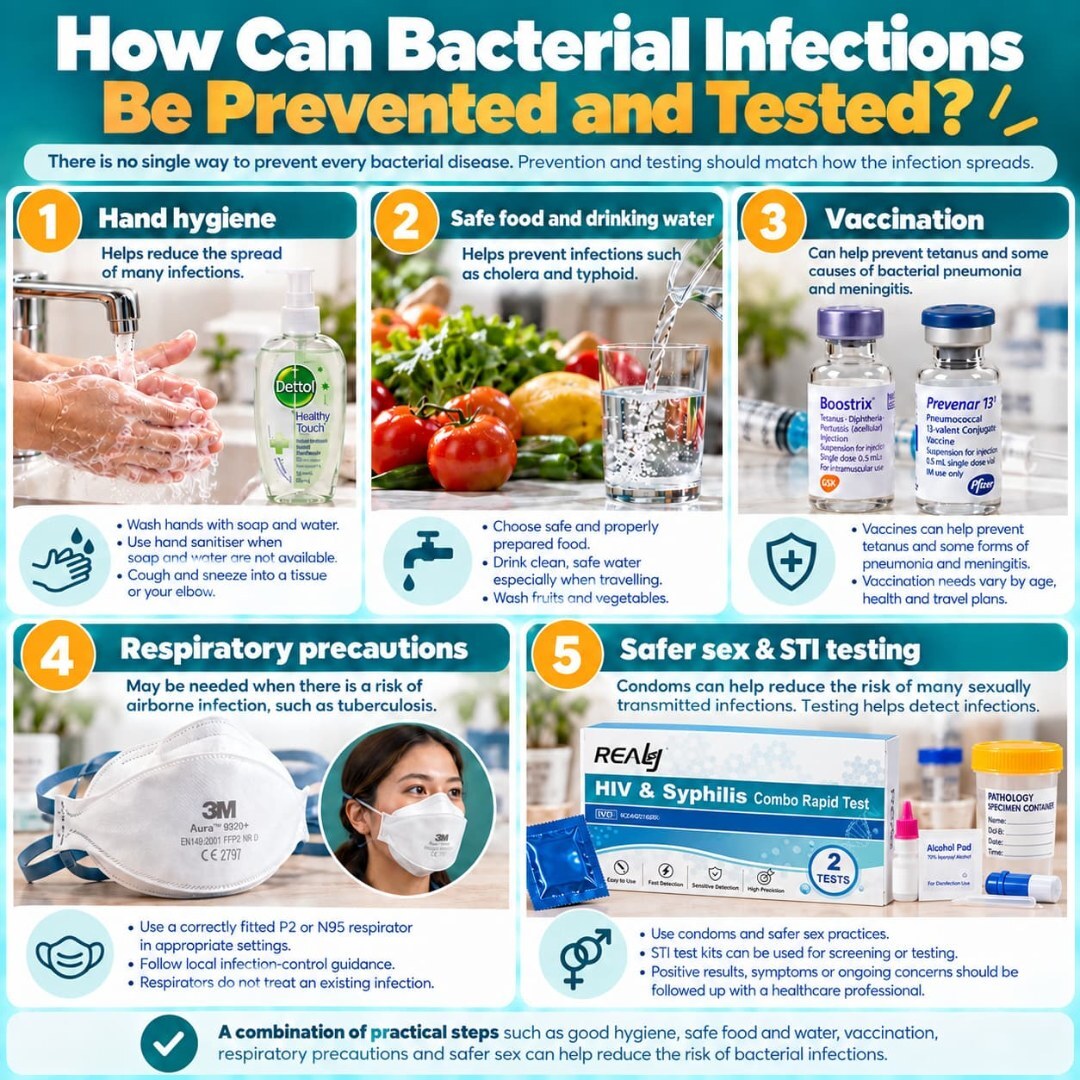
There is no single product or action that prevents every bacterial disease. Prevention should match the way an infection spreads.
Good hand hygiene can help reduce the spread of many infections. Healthdirect recommends proper handwashing and safe food practices. When soap and clean water are not available, an appropriate hand sanitiser can be useful for everyday hand hygiene. (Healthdirect)
Food and water safety is important for diseases such as cholera and typhoid, especially when travelling to areas where sanitation may be limited. (Healthdirect)
Vaccination can help prevent tetanus and some causes of bacterial pneumonia and meningitis. Vaccination needs vary depending on age, health, travel and previous vaccination history. (Healthdirect)
Respiratory precautions may be needed when there is a risk of airborne infection. Australian infection-control guidance includes the use of correctly fitted particulate respirators in appropriate airborne-precaution settings. MedCart offers P2 and N95 respirator masks. Correct fit and use are important, and respirators do not treat an existing infection. (ACSQHC)
Safer sex and testing are important for gonorrhoea. Condoms and contraceptives can help reduce the risk of many sexually transmitted infections. MedCart also offers STI test kits for specific infections and sample types. An at-home test is a screening or testing tool; it does not prevent or treat an STI. Positive results, symptoms or ongoing concerns should be followed up with a healthcare professional. (Healthdirect)
What Products Can Support Care During a Bacterial Illness?
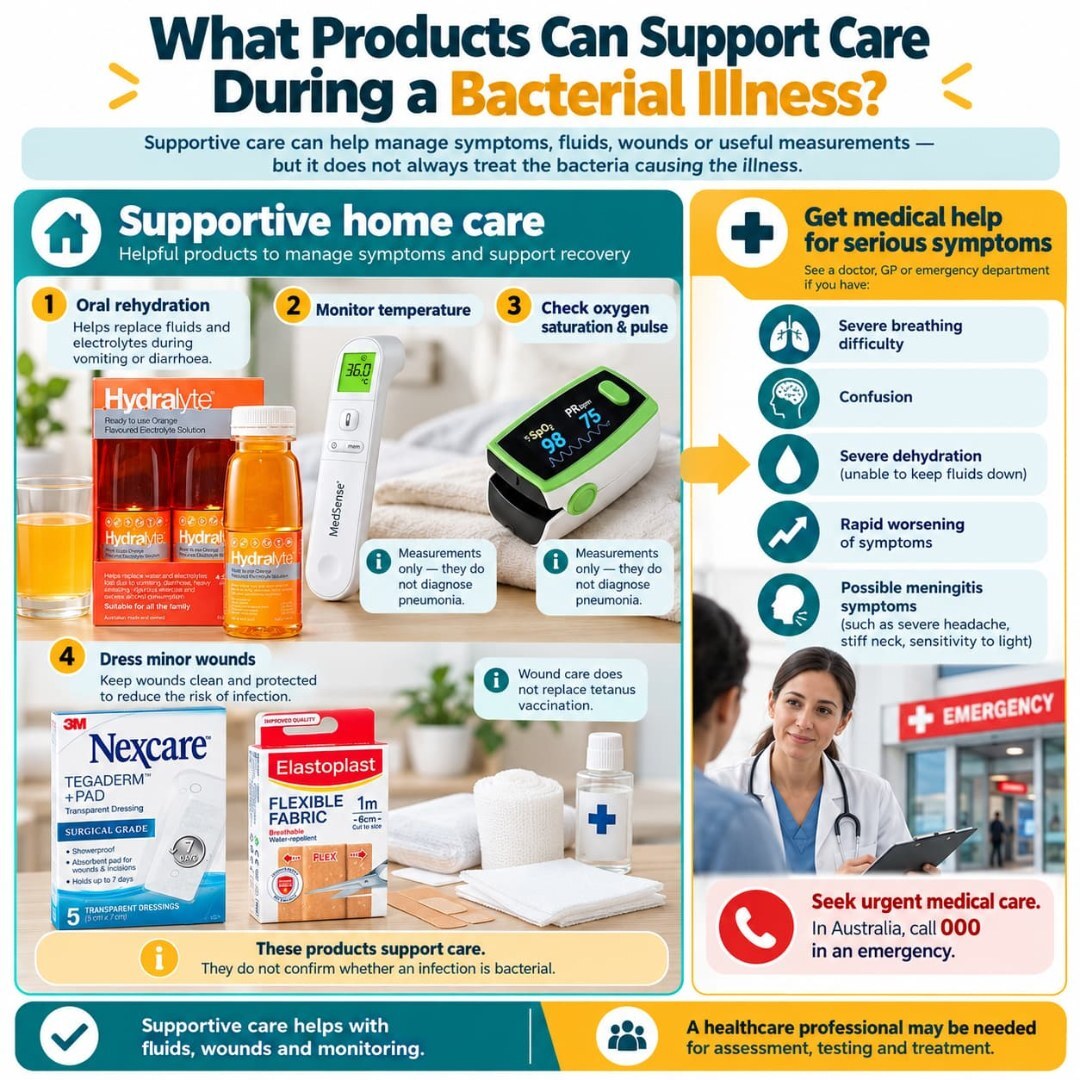
Supportive care helps manage symptoms, fluid loss, wounds or useful measurements while an illness is being assessed or treated. It does not necessarily treat the bacteria causing the disease.
For illnesses that cause diarrhoea or vomiting, dehydration can become an important concern. Oral rehydration products are designed to replace fluids and electrolytes. A product such as Hydralyte Ready-to-Use Electrolyte Solution may be used according to its label for fluid loss associated with vomiting and diarrhoea. Oral rehydration can be an important part of cholera care, but it does not kill Vibrio cholerae. Severe dehydration needs urgent medical treatment. (Healthdirect)
A digital thermometer can help monitor body temperature. A pulse oximeter measures oxygen saturation and pulse rate. These devices provide measurements only. They cannot diagnose pneumonia or tell whether an infection is bacterial. (Healthdirect)
For everyday minor wound care, MedCart also offers first aid antiseptics and wound dressings. Follow the directions for the specific wound-care product. A deep, dirty or puncture wound may need professional assessment, particularly if tetanus vaccination is not up to date. Wound-care products do not replace tetanus vaccination. (Healthdirect)
Seek urgent medical care for severe breathing difficulty, confusion, severe dehydration, rapid worsening of illness or symptoms that may suggest meningitis. Healthdirect describes meningitis as a medical emergency. In Australia, call 000 for an emergency. (Healthdirect)
FAQs
Can antibiotics treat every bacterial disease?
No. Treatment depends on the infection, its severity and the person affected. Some bacterial illnesses may not require antibiotics, while serious infections can need urgent antibiotic treatment. Antibiotics also do not work against viruses. (Healthdirect)
Can you tell if an infection is bacterial from symptoms?
Not always. Viral and bacterial infections can have similar symptoms. Swabs, blood tests, urine tests, stool samples, imaging or other examinations may be needed.
Can an at-home test replace a doctor?
No. An at-home test can be helpful when it is designed for the infection being checked, but it has limits. Positive results, symptoms or concerns may still need professional assessment.
What does supportive care mean?
Supportive care helps with effects of illness, such as dehydration, fever monitoring or wound care. It does not necessarily remove or kill the bacteria causing an infection.
Summary
Bacterial diseases can spread in very different ways. Tuberculosis can spread through the air. Cholera and typhoid are associated with contaminated food or water. Gonorrhoea spreads through sexual contact, while tetanus bacteria can enter the body through wounds.
That means prevention and testing should be matched to the disease.
Products can have useful supporting roles. Respirators may be used for appropriate respiratory protection. Hand hygiene products support infection-control habits. STI tests can help with screening. Thermometers and oximeters provide measurements. Dressings support wound care, while oral rehydration products can replace lost fluids and electrolytes.
These products should not be viewed as cures for bacterial infections.
Where to Buy
MedCart Australia offers healthcare products that may support infection prevention, testing, monitoring and supportive care.
Browse:
- P2 and N95 Respirator Masks
- Hand Sanitisers
- STI Test Kits
- Condoms and Contraceptives
- Thermometers
- Pulse Oximeters
- First Aid Antiseptics
- Wound Dressings
- Hydralyte Ready-to-Use Electrolyte Solution
Visit MedCart Australia to browse the wider range.
Always read the label and follow the directions for use. Seek medical advice if symptoms persist, worsen or you are concerned about an infection.
References
- Healthdirect Australia. Bacterial infections — symptoms, causes and treatments. Last reviewed November 2024. Healthdirect: Bacterial infections (Healthdirect)
- Healthdirect Australia. Tuberculosis (TB) — symptoms, treatment and vaccine. Last reviewed November 2024. Healthdirect: Tuberculosis (Healthdirect)
- Healthdirect Australia. Strep throat — symptoms, treatment and prevention. Last reviewed May 2025. Healthdirect: Strep throat (Healthdirect)
- Healthdirect Australia. Cholera. Last reviewed March 2025. Healthdirect: Cholera (Healthdirect)
- Healthdirect Australia. Pneumonia — causes, symptoms and treatments. Last reviewed May 2025. Healthdirect: Pneumonia (Healthdirect)
- Healthdirect Australia. Tetanus. Last reviewed November 2024. Healthdirect: Tetanus (Healthdirect)
- Healthdirect Australia. Lyme disease — symptoms, causes and treatment. Last reviewed October 2024. Healthdirect: Lyme disease (Healthdirect)
- Healthdirect Australia. Typhoid and paratyphoid fever. Last reviewed May 2025. Healthdirect: Typhoid and paratyphoid fever (Healthdirect)
- Healthdirect Australia. Gonorrhoea (the clap) — symptoms, treatments and prevention. Last reviewed December 2025. Healthdirect: Gonorrhoea (Healthdirect)
- Healthdirect Australia. Meningitis. Last reviewed May 2025. Healthdirect: Meningitis (Healthdirect)
- Healthdirect Australia. Helicobacter pylori. Last reviewed December 2025. Healthdirect: Helicobacter pylori (Healthdirect)
- Australian Commission on Safety and Quality in Health Care. Australian Guidelines for the Prevention and Control of Infection in Healthcare. Current guidance accessed September 2026. Australian infection-control guidelines (ACSQHC)