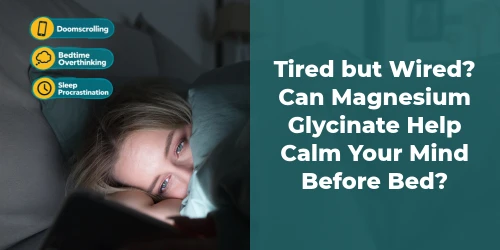

It's midnight. You've already told yourself you're going to sleep, but somehow you're still scrolling through TikTok, replaying an awkward conversation from earlier or thinking about everything you need to do tomorrow.
Your body is exhausted, but your brain seems to have other plans.
Sound familiar? This experience is often described as being "tired but wired" — when you're physically tired but mentally alert at bedtime.
Between doomscrolling, bedtime overthinking and trying to squeeze in some personal time after a busy day, switching off can feel surprisingly difficult.
You may have also seen magnesium glycinate mentioned in TikTok sleep routines and the growing "sleepmaxxing" trend.
But can magnesium glycinate for sleep actually help calm a busy mind, or is the science less convincing than social media suggests?
Here's what magnesium does in the body, what recent research found and what to consider before adding a supplement to your bedtime routine.
Why Do You Feel Tired but Mentally Awake at Night?
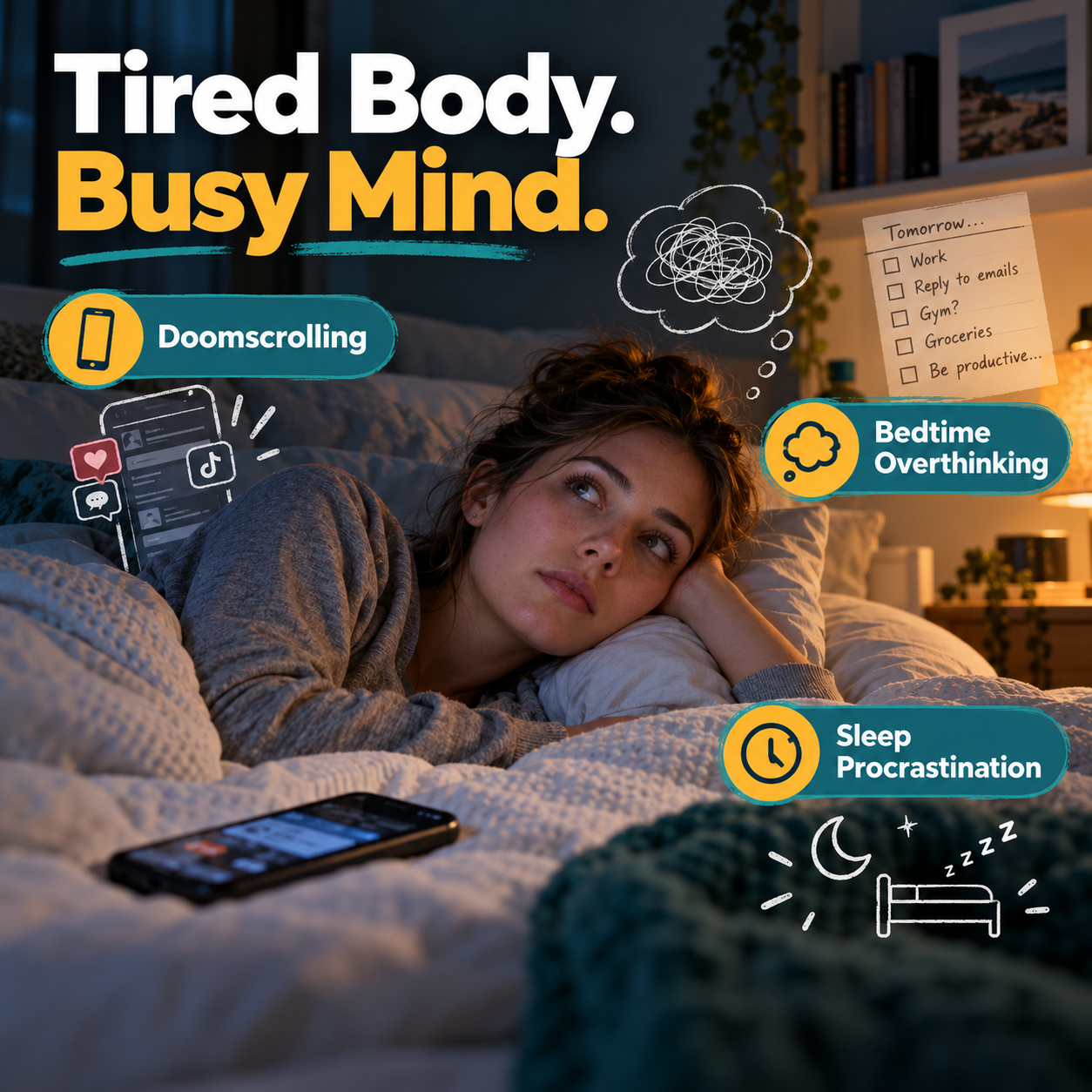
Feeling tired but unable to switch off can happen when your body needs rest but your mind remains occupied with thoughts, worries or stimulation.
Sometimes, the quieter your surroundings become, the louder your thoughts seem.
Common factors that can make falling asleep more difficult include:
- Stress and worry: Thinking about work, study, relationships or tomorrow's responsibilities.
- Late caffeine intake: Coffee, energy drinks and other caffeinated beverages can interfere with sleep.
- Irregular sleep schedules: Frequently changing your bedtime or wake-up time.
- Evening screen use: Bright screens and stimulating content may make winding down harder.
- Underlying sleep conditions: Persistent difficulties may be associated with insomnia or other health concerns.
While magnesium contributes to normal nervous system function, feeling mentally alert at bedtime does not automatically mean you're deficient in magnesium.
Doomscrolling, Bedtime Overthinking and Revenge Bedtime Procrastination
For many people, bedtime is the first opportunity to relax after a busy day. Unfortunately, it's also when unfinished thoughts, notifications and social media can compete for attention.
Doomscrolling Before Bed
Ever opened TikTok or Instagram for five minutes and suddenly realised an hour has passed?
Doomscrolling refers to repeatedly consuming negative or distressing online content. More generally, late-night scrolling can keep you mentally engaged when you're supposed to be winding down.
Bright screens, emotionally stimulating content and delayed bedtimes can all contribute to sleep difficulties.
Revenge Bedtime Procrastination
After spending the day working, studying or managing responsibilities, some people deliberately stay awake longer to reclaim personal time.
This is often called revenge bedtime procrastination.
Whether it's watching another episode, gaming or scrolling through social media, staying up later can reduce the time available for sleep.
Bedtime Overthinking
Sometimes, the problem isn't your phone. It's your thoughts.
You might replay an awkward conversation, worry about tomorrow's workload or mentally organise everything you haven't finished.
This kind of mental activity can make it difficult to relax, particularly when combined with stress or an inconsistent sleep routine.
Where does magnesium glycinate fit in? Magnesium supports normal nervous system function, but there's no convincing evidence that taking magnesium glycinate specifically counteracts doomscrolling, bedtime procrastination or overthinking.
What Is Magnesium Glycinate?
Magnesium glycinate is a supplement containing magnesium bound to glycine, an amino acid naturally present in the body.
It is also commonly called magnesium bisglycinate, particularly when referring to magnesium bound to two glycine molecules.
Magnesium is an essential mineral involved in hundreds of biochemical reactions, including:
- Normal nerve signalling.
- Muscle function.
- Energy production.
- Protein synthesis.
- Maintaining normal electrolyte balance.
Glycine also contributes to protein production and acts as a neurotransmitter in certain parts of the nervous system.
Because of these functions, magnesium glycinate is commonly marketed for relaxation and sleep support.
However, the biological roles of magnesium and glycine do not automatically mean that taking magnesium glycinate supplements improves sleep or treats insomnia.
How Does Magnesium Affect the Brain and Nervous System?
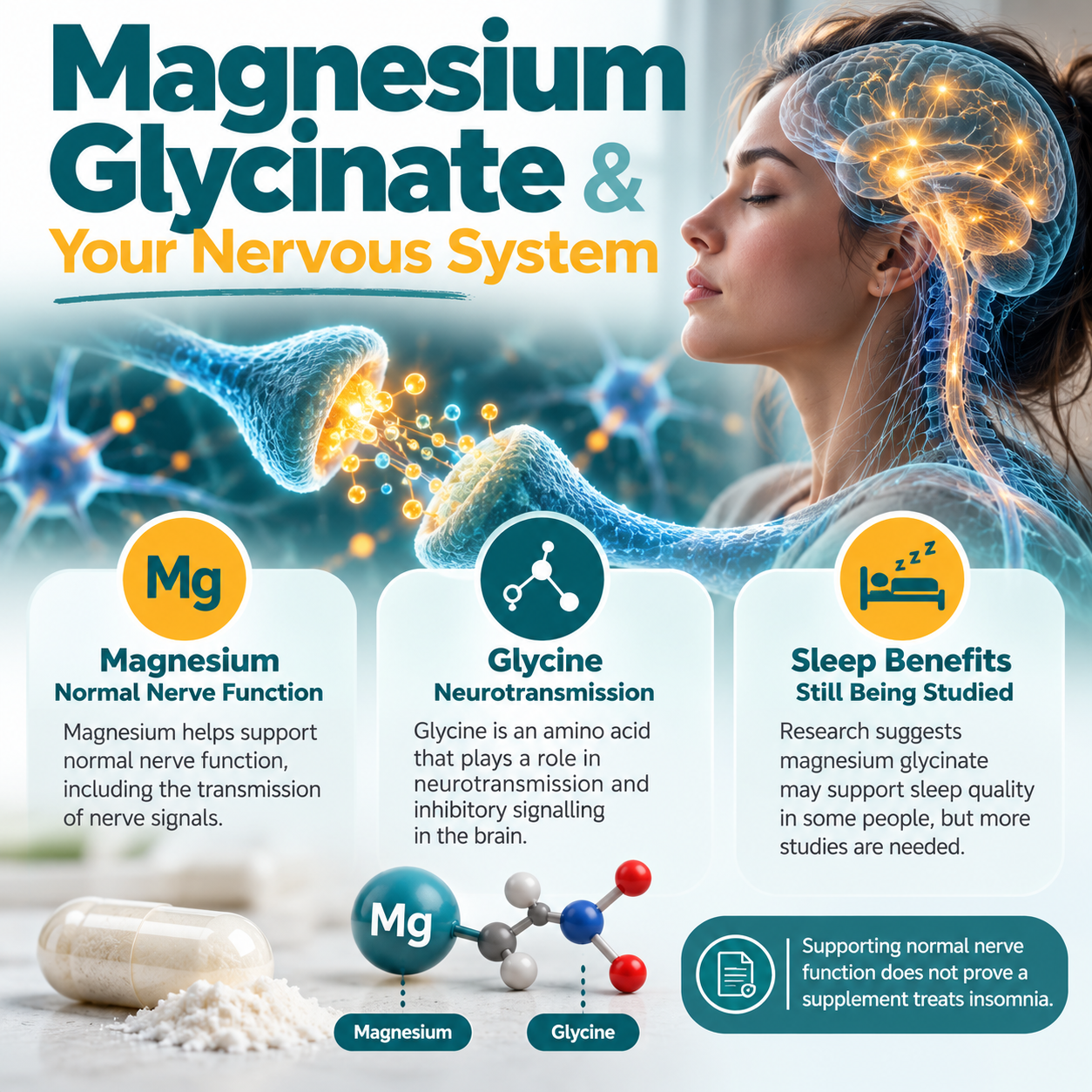
Magnesium helps regulate normal communication between nerve cells and supports muscle function.
It also interacts with mechanisms involved in nerve signalling, including N-methyl-D-aspartate (NMDA) receptors, which play a role in communication between neurons.
Glycine is involved in neurotransmission and acts as an inhibitory neurotransmitter in certain areas of the nervous system.
These biological functions help explain why researchers are interested in magnesium and sleep.
However, supporting normal nervous system function is different from proving that taking additional magnesium will calm your mind or improve sleep when your magnesium intake is already adequate.
Can Magnesium Glycinate Help Calm a Racing Mind Before Bed?
Magnesium glycinate is frequently discussed as a calming supplement, especially among people who struggle with bedtime overthinking.
However, current research does not establish magnesium glycinate as a proven treatment for racing thoughts, anxiety or stress-related insomnia.
For someone dealing with ongoing stress, irregular sleep schedules or late-night scrolling, addressing those factors may be more helpful than relying on a supplement alone.
And while magnesium is an essential nutrient, not everyone experiencing sleep difficulties needs additional magnesium.
Does Magnesium Glycinate Actually Help You Sleep?
Magnesium glycinate has become popular in sleep and wellness discussions, but what does the research actually say?
A 2025 clinical trial involving 155 adults found a small improvement in self-reported insomnia symptoms after four weeks of magnesium bisglycinate supplementation compared with placebo.
However, a 2026 systematic review found that evidence for magnesium supplements and sleep remains inconsistent and generally of low to very low certainty.
The takeaway? Magnesium glycinate may offer modest sleep benefits for some people, but it isn't a proven quick fix for racing thoughts or insomnia.
How Long Does Magnesium Glycinate Take to Work for Sleep?
Wondering whether magnesium glycinate works immediately or needs to be taken consistently?
There is currently no established timeframe showing how quickly magnesium glycinate reliably improves sleep.
The 2025 clinical trial assessed outcomes over four weeks. It did not establish that a single dose produces an immediate sleep benefit.
Magnesium glycinate is not a fast-acting sleeping medicine, and any perceived changes may depend on dietary magnesium intake, overall health and the underlying cause of sleep difficulties.
If sleep problems persist or affect your daily life, seek advice from a healthcare professional rather than increasing a supplement dose.
Magnesium Glycinate vs Citrate vs Threonate: Which Is Better for Sleep?
Magnesium supplements come in several forms, and people often compare them when looking for products associated with relaxation or sleep.
Different forms can vary in elemental magnesium content, absorption and gastrointestinal tolerability.
However, current research does not establish one magnesium form as consistently superior for improving sleep.
Rather than choosing a supplement solely because it's marketed for sleep, compare the amount of elemental magnesium, formulation, tolerability and product directions.
Interested in comparing products? You can browse magnesium glycinate supplements at MedCart Australia.
When Should You Take Magnesium Glycinate?
Magnesium glycinate is sometimes marketed for evening use, but research has not established one optimal time of day for improving sleep.
If you choose to take a supplement, follow the directions on its label.
Some people prefer taking magnesium with food to reduce gastrointestinal discomfort.
It's also important to understand the difference between the total weight of a magnesium compound and the amount of elemental magnesium it provides.
Always check the active ingredient information and avoid combining multiple magnesium-containing supplements without considering the total amount you're taking.
Can You Get Enough Magnesium Through Food?
Before adding a supplement to your routine, it's worth looking at your diet.
Magnesium is naturally found in foods such as:
- Leafy green vegetables.
- Wholegrains.
- Beans and lentils.
- Nuts and seeds.
- Some dairy products and fortified foods.
A varied diet can help support adequate magnesium intake alongside other essential nutrients.
Not everyone experiencing poor sleep needs magnesium supplementation, and taking extra magnesium does not necessarily improve sleep when dietary intake is already adequate.
Who Should Be Careful With Magnesium Supplements?
Magnesium is essential for health, but supplements are not suitable for everyone.
Higher supplemental intakes can cause diarrhoea, nausea and abdominal cramping.
People with impaired kidney function may have difficulty clearing excess magnesium and should seek medical advice before taking supplements.
Magnesium can also interact with certain medicines, including some antibiotics and osteoporosis medicines, by affecting their absorption.
The US National Institutes of Health lists an adult upper intake level of 350 mg per day from magnesium supplements and medications unless otherwise advised by a healthcare professional. This does not include magnesium naturally found in food.
Australian products may have different label directions and warnings, so always follow the instructions on the product you purchase.
If you're pregnant, breastfeeding, taking regular medication or managing a medical condition, speak with a healthcare professional before starting a magnesium supplement.
What Else Can Help You Switch Off Before Bed?
Whether or not you choose magnesium glycinate, your bedtime habits can make a difference to your sleep routine.
Here are six practical ways to make winding down easier:
- Keep a consistent sleep schedule. Try to go to bed and wake up at similar times each day.
- Reduce late caffeine intake. Consider whether afternoon coffee, tea or energy drinks are affecting your sleep.
- Give yourself a scrolling cut-off. Try putting your phone aside before bedtime and choosing a less stimulating activity.
- Create a relaxing environment. A cool, dark and quiet bedroom can support better sleep conditions.
- Write down tomorrow's tasks. If unfinished responsibilities keep running through your mind, a short list may help you organise them.
- Seek help for ongoing insomnia. Cognitive behavioural therapy for insomnia (CBT-I) is a recommended first-line treatment for chronic insomnia.
And if you've been exploring other magnesium products trending in wellness routines, read our related article: Can Magnesium Drinks Help You Sleep?
Frequently Asked Questions About Magnesium Glycinate for Sleep
Does magnesium glycinate calm the brain?
Magnesium contributes to normal nervous system function, and glycine is involved in neurotransmission. However, research has not established that magnesium glycinate supplements directly calm racing thoughts or treat anxiety.
Is magnesium glycinate good for sleep?
A 2025 clinical trial found a small improvement in self-reported insomnia symptoms after four weeks of magnesium bisglycinate supplementation. However, a 2026 systematic review found that the broader evidence remains inconsistent.
How long before bed should I take magnesium glycinate?
There is no clinically established optimal time before bed. Follow the product label and seek professional advice if you're unsure about timing, dosage or medicine interactions.
Is magnesium glycinate better than magnesium citrate for sleep?
There is insufficient direct comparative research to conclude that magnesium glycinate is better than magnesium citrate for sleep. The most suitable product depends on individual needs, tolerability and professional advice.
Why am I tired but my brain won't switch off at night?
Feeling tired but mentally alert can be associated with stress, bedtime overthinking, caffeine, late-night screen use, irregular sleep schedules or an underlying sleep condition. It does not necessarily indicate a magnesium deficiency.
Can magnesium glycinate help after doomscrolling before bed?
There is no reliable evidence that magnesium glycinate reverses the effects of late-night scrolling or digital overstimulation. Reducing stimulating screen use before bedtime and maintaining a consistent sleep schedule may be more useful starting points.
Final Thoughts: Can Magnesium Glycinate Help You Feel Less Tired but Wired?
Magnesium glycinate has attracted attention as a supplement associated with relaxation and sleep, especially among people looking for ways to improve their nighttime routines.
Research suggests it may provide modest sleep-related benefits for some people, but the evidence remains limited and inconsistent.
If you're constantly feeling tired but wired, consider the bigger picture: your sleep schedule, stress levels, dietary magnesium intake and bedtime habits.
After all, better sleep isn't just about finding the next trending supplement. It's also about creating a routine that gives your mind and body the opportunity to rest.
Explore Magnesium Glycinate at MedCart Australia
Considering magnesium glycinate as part of your wellness routine?
You can explore magnesium glycinate supplements at MedCart Australia and compare available products from independent retailers.
Before purchasing, check the elemental magnesium content, ingredients, recommended dosage and any additional vitamins or minerals included in the formulation.
Product availability may vary. Always read the label and follow the directions for use.
If you experience persistent sleep difficulties or take regular medication, seek advice from a healthcare professional.
References
- Schuster J, Cycelskij I, Lopresti A, Hahn A. Magnesium Bisglycinate Supplementation in Healthy Adults Reporting Poor Sleep: A Randomized, Placebo-Controlled Trial. Nature and Science of Sleep. 2025. View clinical trial.
- Lopresti AL, Smith SJ, Drummond PD. Magnesium Supplementation for Sleep in Adults: A Systematic Review of Randomized Controlled Trials. Journal of Dietary Supplements. 2026. View systematic review.
- National Institutes of Health, Office of Dietary Supplements. Magnesium: Fact Sheet for Health Professionals. View magnesium fact sheet.
- Healthdirect Australia. Magnesium. View magnesium information.
- Healthdirect Australia. Insomnia. View insomnia information.