

Introduction
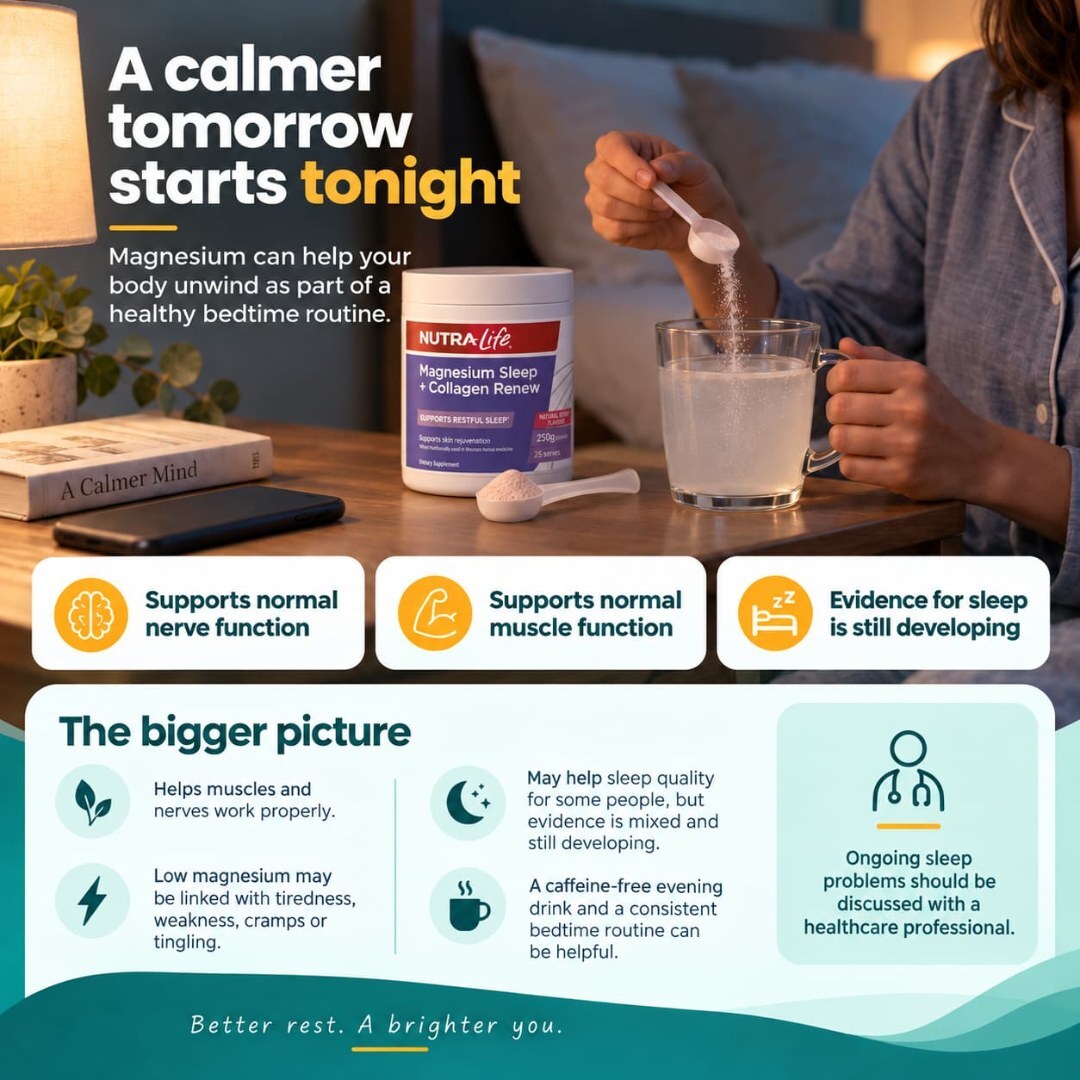
A warm drink can be a calming part of a bedtime routine. Some products also contain magnesium and are promoted for sleep support. But can you drink your way to better sleep?
Magnesium is an essential mineral that supports normal nerve and muscle function. Research has explored whether magnesium supplements may improve sleep quality, but the evidence is still developing.
A magnesium drink may be convenient, especially for people who do not enjoy swallowing tablets. However, it is not a guaranteed sleep treatment. The best choice depends on the magnesium amount, the form used, the other ingredients and your health needs.
This article explains what to look for in magnesium and sleep drinks and answers common safety questions.
Quick answer: Magnesium drinks may support sleep quality for some people, but no product is proven to work for everyone. Check the label, avoid caffeine near bedtime and speak with a pharmacist if you take medicines or have a bowel or kidney condition.
What Does Magnesium Have to Do with Sleep?
Magnesium helps the muscles and nerves work properly. It also supports processes involved in maintaining normal calcium and potassium levels.
When magnesium levels are low, symptoms may include tiredness, weakness, muscle cramps, tingling and, in severe cases, seizures. People with gastrointestinal conditions, ongoing diarrhoea or poor dietary intake may be more likely to have low magnesium levels.
Researchers have studied magnesium supplements and sleep. A 2024 systematic review found that several small studies reported improvements in at least one sleep measure. However, the studies used different magnesium forms, doses and treatment periods. The researchers said larger studies are needed.
This means magnesium may be more useful for someone with low intake or a higher risk of deficiency. It does not mean that every person with poor sleep needs magnesium.
A caffeine-free drink may also be helpful because it creates a regular evening routine. Other useful habits include dimming lights, limiting screens and keeping a consistent sleep schedule. Persistent sleep problems should be discussed with a healthcare professional.
What is the practical takeaway?
Magnesium may support sleep quality for some people, but it should be considered part of a healthy routine rather than a cure for insomnia.
Which Magnesium Drink Is Best for Sleep?
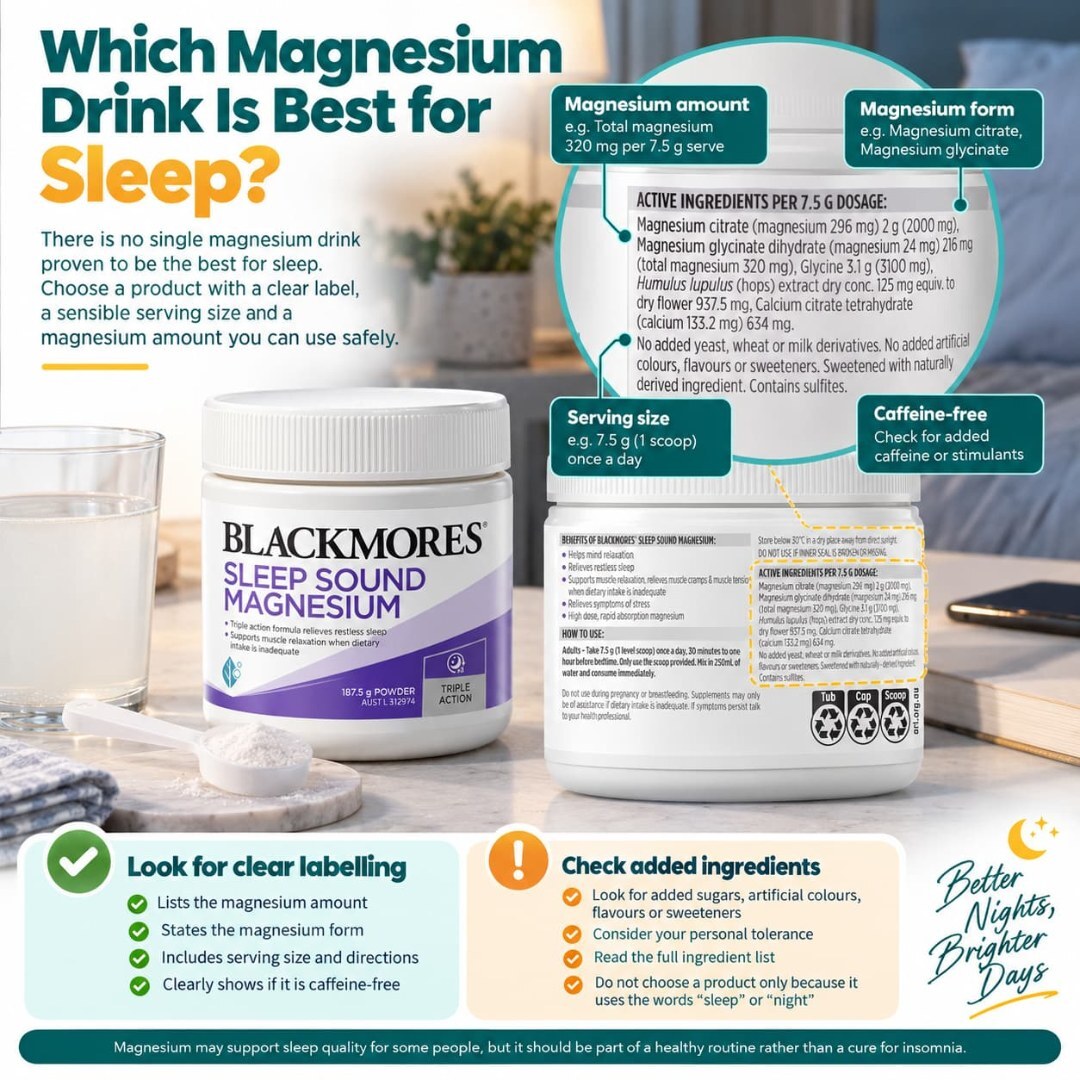
There is no magnesium drink proven to be the best for sleep. A suitable product should have a clear label, a sensible serving size and a magnesium amount that you can use safely.
Magnesium drinks may contain citrate, glycinate, bisglycinate, oxide, chloride or lactate. According to the National Institutes of Health Office of Dietary Supplements, citrate, lactate, chloride and aspartate may be absorbed more completely than oxide and sulphate. However, personal tolerance also matters. A product that causes diarrhoea may not be suitable for you.
When comparing magnesium and sleep drinks, check:
A drink may be a good option if you prefer a flavoured product or find tablets difficult to swallow. Do not choose a product only because it uses the words “sleep” or “night”. Read the full ingredient list and follow the label.
Is there a magnesium drink that can help me sleep?
Yes, some magnesium drinks may help support sleep quality for some people. However, no drink can guarantee better sleep. Choose a caffeine-free product with clear ingredient information and do not take more than the recommended serving.
How Much Magnesium Is Safe to Take?
Your magnesium needs depend on your age, sex and life stage. Healthdirect lists a recommended dietary intake of 310 to 320 mg per day for adult women and 400 to 420 mg per day for adult men. These amounts include magnesium from food.
Good food sources include leafy green vegetables, legumes, nuts, seeds and whole grains. Food is usually the first place to look because it provides other nutrients as well.
Too much magnesium from supplements can cause diarrhoea, nausea and abdominal cramps. The NIH Office of Dietary Supplements lists 350 mg per day as the upper limit for magnesium from supplements and medicines for healthy adults. This limit does not include magnesium naturally found in food.
This is not a personal target. Some people may need a different amount under medical supervision. Also remember that magnesium may be present in antacids, laxatives and other supplements.
Extra care is needed if you have reduced kidney function. The kidneys remove excess magnesium from the body, so kidney problems may increase the risk of magnesium build-up.
Before taking a magnesium drink
- Check the serving size and total magnesium amount.
- Do not combine several magnesium products without advice.
- Ask a pharmacist if you take prescription medicines.
- Stop and seek advice if the product causes ongoing diarrhoea, severe cramps or vomiting.

Can You Take Magnesium with Colitis or Lamotrigine?
Some health conditions and medicines need extra care when choosing magnesium and sleep drinks.
Can I take magnesium if I have colitis?
Speak with your doctor or pharmacist before taking magnesium if you have colitis, Crohn’s disease or another bowel condition.
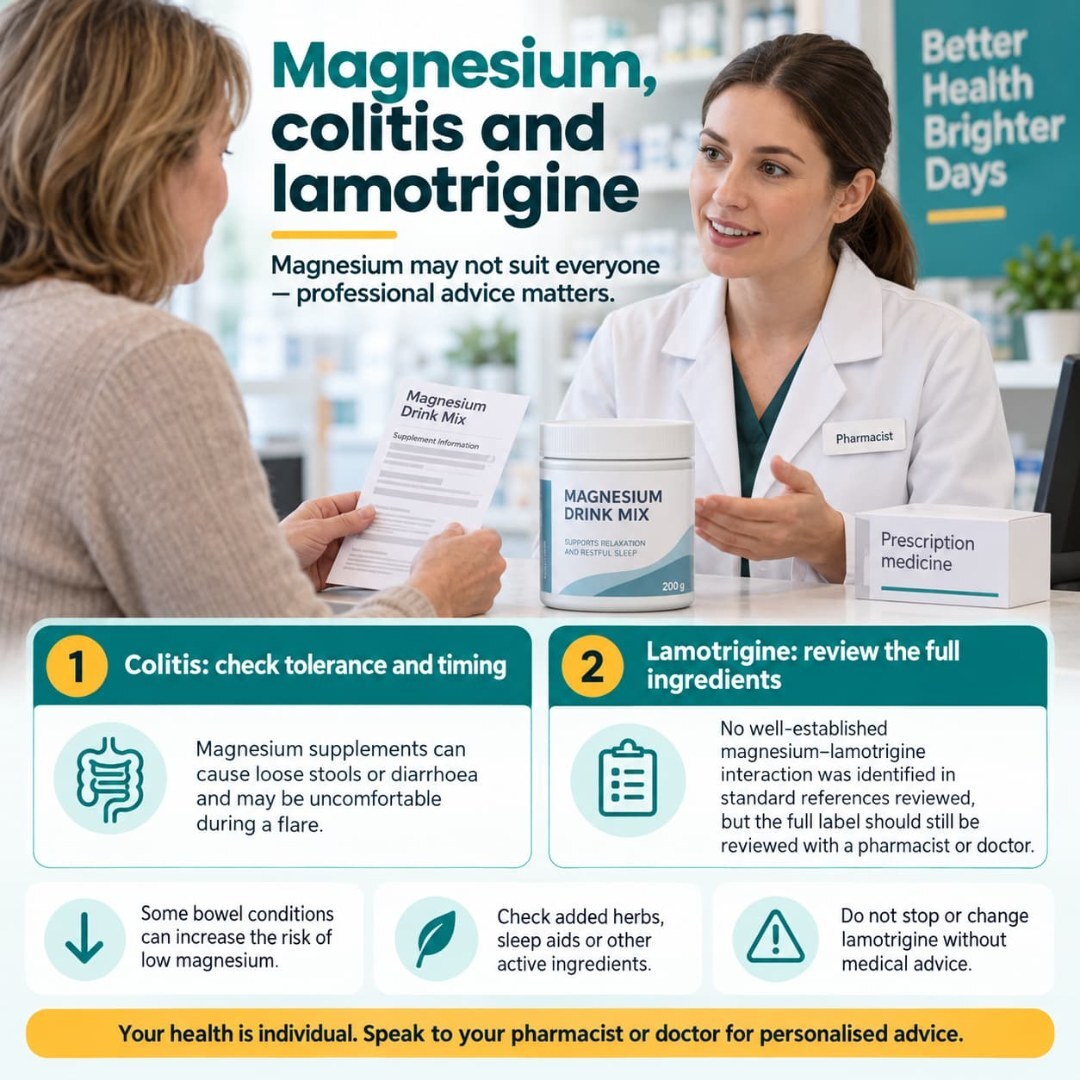
Magnesium supplements can cause loose stools or diarrhoea. This may be especially uncomfortable during an active flare. People with gastrointestinal disease may also be at higher risk of low magnesium because of poor intake, reduced absorption, vomiting or diarrhoea.
The right choice depends on your symptoms, diagnosis, medicines and magnesium level. If a healthcare professional recommends magnesium, ask which form and dose to use. Do not use a magnesium drink as a treatment for colitis or as a replacement for prescribed care.
Is magnesium OK to take with lamotrigine?
No well-established magnesium–lamotrigine interaction was identified in the standard references reviewed for this article. However, this does not prove that every magnesium drink is suitable for every person taking lamotrigine.
Lamotrigine is a prescription medicine used for conditions including epilepsy and bipolar disorder. A magnesium drink may also contain herbs, sleep aids or other active ingredients. These ingredients may have their own precautions.
Before using magnesium with lamotrigine:
- Show the complete product label to a pharmacist or doctor.
- Do not stop or change lamotrigine without medical advice.
- Check all added herbs and ingredients.
- Ask about timing if you take other medicines.
- Seek advice if you develop a rash, severe dizziness or unusual drowsiness.
FAQs
Is it okay to drink electrolytes every day?
It depends on the product and your health needs. Some magnesium drinks are electrolyte products, but daily use may add more magnesium, sodium, sugar or other ingredients than you need. Check the label and ask a healthcare professional if you have kidney disease, bowel disease or take prescription medicines.
Should I take magnesium at night?
Many people take magnesium in the evening because it fits a bedtime routine. There is no universal rule that it must be taken at night. Follow the product directions.
Can magnesium cause diarrhoea?
Yes. Diarrhoea is a known possible effect of taking too much supplemental magnesium. The risk may vary by dose and form.
When should I see a doctor about poor sleep?
Seek advice if poor sleep continues, affects your daily life, or occurs with loud snoring, breathing pauses, severe anxiety, pain or unusual daytime sleepiness.
Summary
Magnesium and sleep drinks may be a convenient addition to a bedtime routine, but they are not guaranteed to improve sleep.
Choose a clearly labelled, caffeine-free product. Check the magnesium amount, added ingredients and serving instructions. If you have colitis, kidney problems or take lamotrigine, speak with a pharmacist or doctor before use.
Where to Buy Magnesium and Sleep Products
Explore the Magnesium and sleep collection at MedCart Australia. Compare available products, review the product information and check the label before choosing a magnesium drink or supplement.
Visit MedCart Australia to browse health, wellness and personal care products from marketplace sellers.
References
- Healthdirect Australia, “Magnesium and your health – health benefits and how much you need.” Last reviewed April 2025. https://www.healthdirect.gov.au/magnesium
- National Institutes of Health, Office of Dietary Supplements, “Magnesium – Health Professional Fact Sheet.” Updated 6 January 2026. https://ods.od.nih.gov/factsheets/Magnesium-HealthProfessional/
- Rawji A, Peltier MR, Mourtzanakis K, et al., “Examining the Effects of Supplemental Magnesium on Self-Reported Anxiety and Sleep Quality: A Systematic Review.” Cureus, 29 April 2024. https://pubmed.ncbi.nlm.nih.gov/38817505/
- National Prescribing Service Australia, “APX-Lamotrigine: Australian Product Information.” Publication date not stated; accessed 16 September 2026. https://www.nps.org.au/medicine-finder/apx-lamotrigine