

Introduction
Electrolytes are minerals that help the body manage fluids, nerves and muscles. They include sodium, potassium, chloride, calcium and magnesium.
Most healthy people get enough electrolytes through food and regular drinks. However, the body can lose extra fluid and salts through heavy sweating, vomiting or diarrhoea.
This guide explains the common signs that you may need more fluids, when electrolyte hydration salts may be useful, and whether drinking electrolytes every day is necessary.
Quick answer: Electrolytes may help after heavy fluid loss, but water is usually enough for everyday hydration.
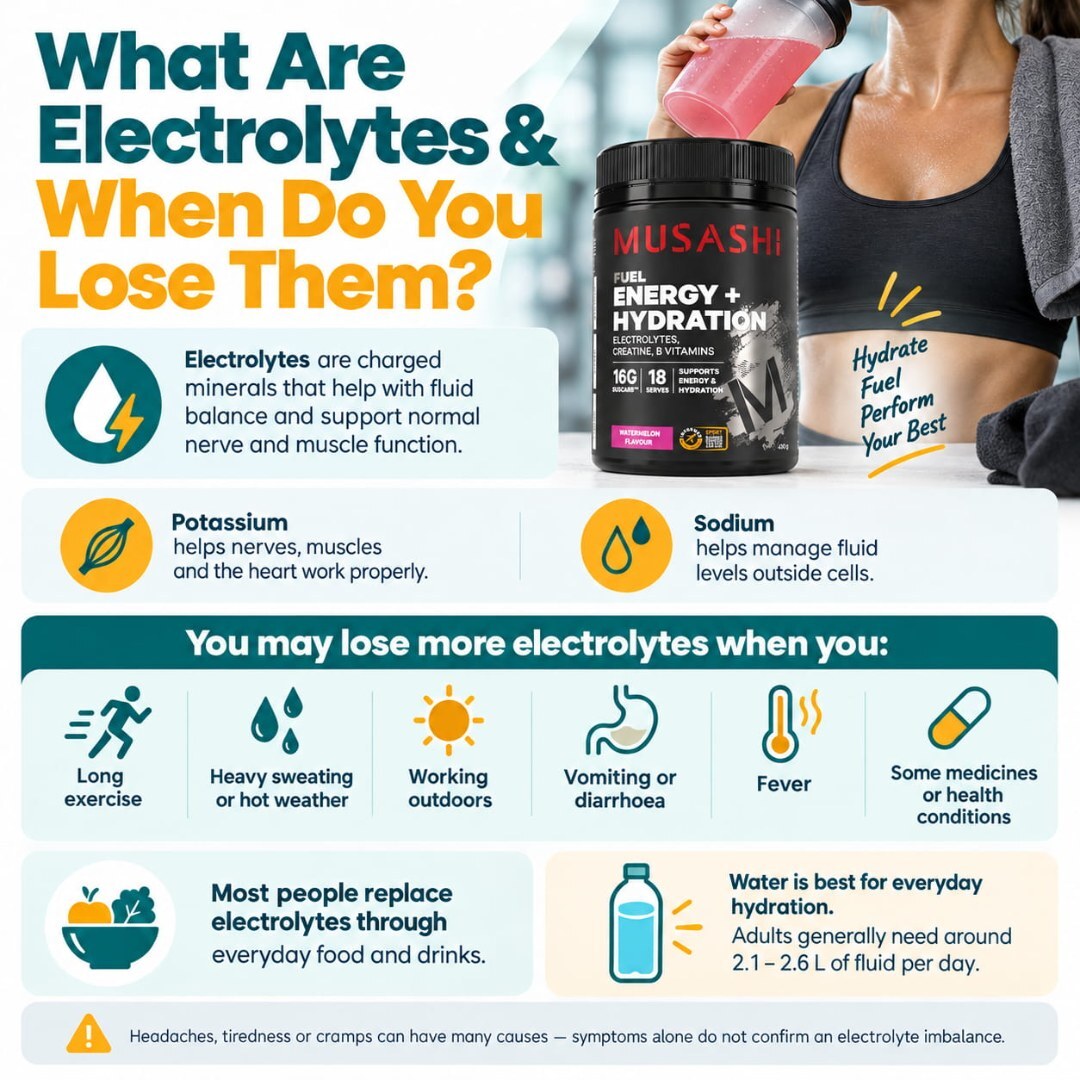
What Are Electrolytes and When Do You Lose Them?
Electrolytes are minerals with an electrical charge. They help control fluid balance and support normal nerve and muscle activity.
Healthdirect explains that potassium helps nerves, muscles and the heart work properly. Sodium also helps manage fluid levels outside the body’s cells. The kidneys help control the amount of some electrolytes in the body.
You may lose more fluid and salts when you:
- Exercise for a long time
- Sweat heavily in hot or humid weather
- Work outdoors
- Have vomiting or diarrhoea
- Have a fever
- Take certain medicines
- Have a medical condition that affects fluid balance
Everyday food and drinks usually replace the electrolytes lost through normal activity. This is why most people do not need an electrolyte supplement every day.
Healthdirect says water is the best drink for everyday hydration. As a general guide, adults need around 2.1 to 2.6 litres of fluid each day, but needs vary with age, body size, activity, food, weather and health.
Electrolytes are not a cure for every headache, tired feeling or muscle cramp. These symptoms can have many causes. Symptoms alone cannot confirm an electrolyte imbalance.
Remember: Extra electrolytes are most relevant when there has been extra fluid loss.
What Are the Signs That You Need Electrolytes?
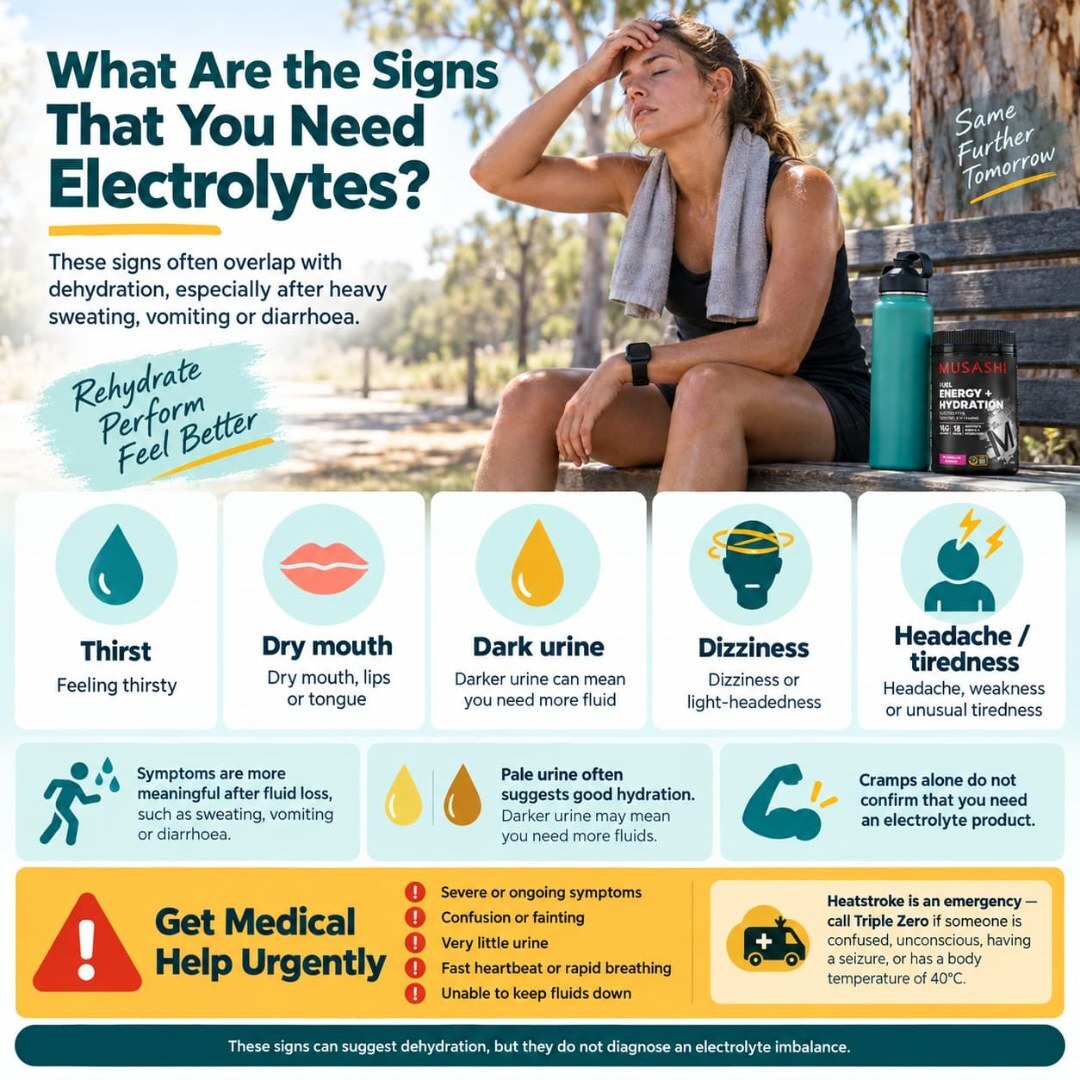
The signs that you may need electrolytes are often similar to the signs of dehydration. Healthdirect lists these common symptoms:
- Feeling thirsty
- Dry mouth, lips or tongue
- Darker urine
- Urinating less often
- Dizziness or light-headedness
- Headache
- Feeling weak or unusually tired
These signs are more meaningful when they happen after a clear cause of fluid loss, such as heavy sweating, vomiting or diarrhoea.
Urine colour can provide a simple hydration clue. Pale, plentiful urine usually suggests good hydration. Darker urine may mean you need more fluid. However, urine can also change colour because of food, supplements or medicines.
Muscle cramps may occur during prolonged exercise or heavy sweating, but cramps have many possible causes. A cramp alone does not prove that you need an electrolyte product.
A simple way to think about the signs is:
Seek medical advice if symptoms are severe or continue. Confusion, fainting, very little urine, a fast heartbeat, rapid breathing or being unable to keep fluids down can be serious signs.
Heatstroke is an emergency. Healthdirect advises calling triple zero if someone is confused, unconscious, having a seizure or has a body temperature of 40°C.
Important: These signs can suggest dehydration, but they do not diagnose an electrolyte imbalance.
When Can Electrolyte Hydration Salts Help?
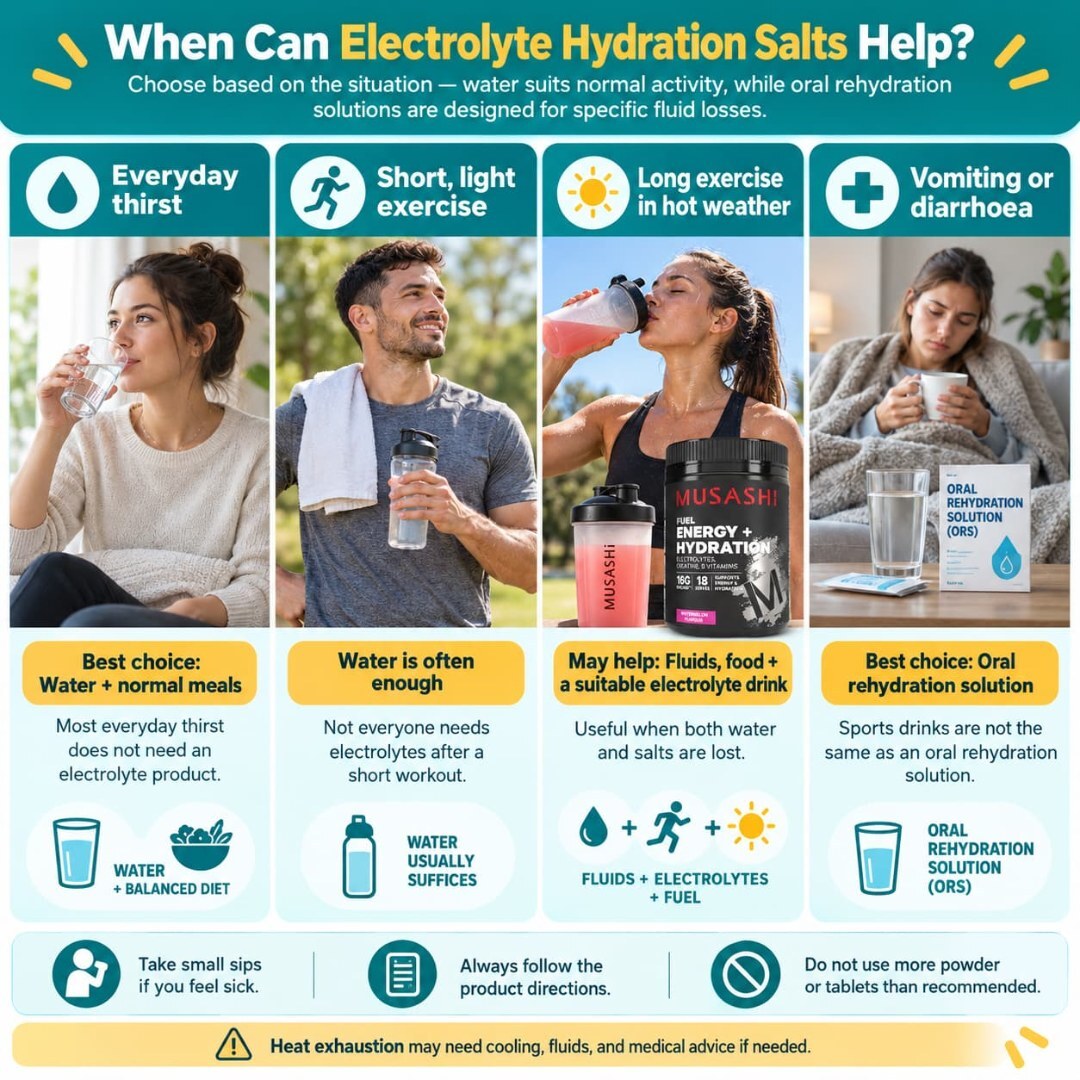
Electrolyte hydration salts may be useful when the body has lost both water and salts. The best option depends on what caused the fluid loss.
For vomiting and diarrhoea, Healthdirect recommends an oral rehydration solution. These products contain a specific balance of salts and glucose to help replace lost fluids and electrolytes.
A general sports drink is not always the same as an oral rehydration solution. Do not assume that every electrolyte drink is suitable for illness.
Take small sips if you feel sick. Always follow the product directions. Do not use more powder or tablets than recommended.
For exercise, a 2025 systematic review published in the Journal of Athletic Training found that carbohydrate-electrolyte drinks may support rehydration after exercise-related fluid loss. However, the studies had different results and this does not mean every person needs electrolytes after every workout.
Choose based on the situation: Water may suit normal activity, while oral rehydration solutions are designed for specific fluid losses.
Is It Okay to Drink Electrolytes Every Day?
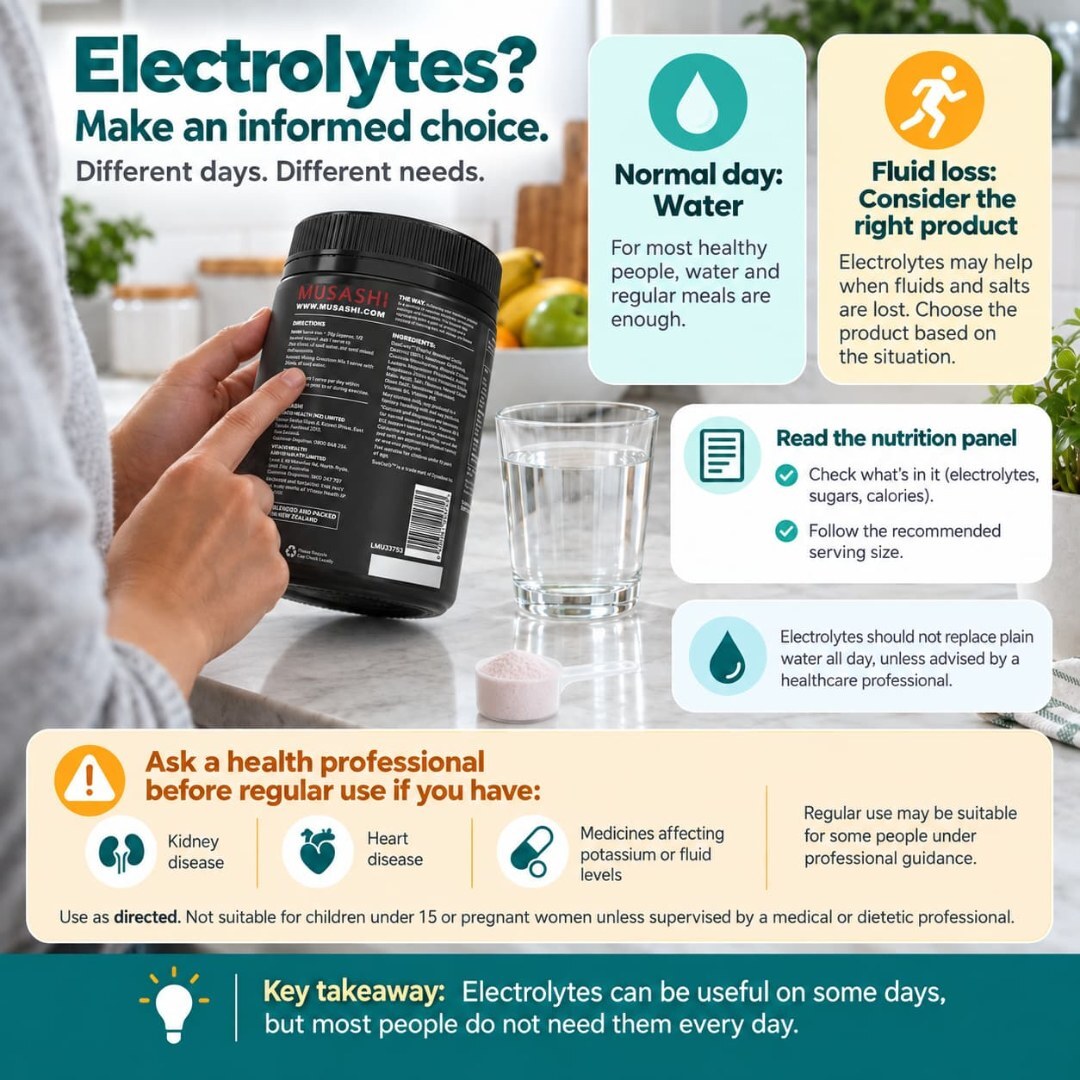
For most healthy people, drinking electrolytes every day is not necessary. Water, regular meals and food naturally provide fluids and minerals.
The Australian Dietary Guidelines recommend drinking plenty of water and limiting drinks with added sugars, including many sports drinks. Some electrolyte products contain little or no sugar, but they may still contain sodium, potassium or other minerals.
Read the nutrition panel and follow the recommended serving size. Electrolytes should not replace plain water throughout the day unless a healthcare professional has advised you to use them that way.
Daily use may be suitable for some people under professional guidance. This may include people with ongoing fluid losses, a medical condition or a treatment plan that affects electrolytes.
Ask a doctor, dietitian or pharmacist before regular use if you have:
- Kidney disease
- Heart disease
- High blood pressure
- A condition affecting fluid balance
- Medicines that affect potassium or fluid levels
Healthdirect notes that both high and low potassium levels can be dangerous, particularly when the kidneys do not work properly.
If a product is labelled as a formulated supplementary sports food, Food Standards Australia New Zealand says it should be used as directed. These products are not suitable for children under 15 or pregnant women unless supervised by a medical or dietetic professional.
The simple answer: Electrolytes can be useful on some days, but most people do not need them every day.
FAQs
Can electrolytes help with tiredness?
Tiredness can happen with dehydration, but it also has many other causes. If tiredness continues, speak with a healthcare professional instead of assuming you need electrolytes.
Are electrolyte drinks the same as oral rehydration solutions?
No. Oral rehydration solutions are made with a specific balance of salts and glucose for replacing fluids during vomiting or diarrhoea. Sports and general electrolyte drinks may have different ingredients.
Can children drink electrolyte products?
Ask a pharmacist or doctor first, especially for babies and young children. Follow the product label carefully. Some sports food products are not suitable for children.
What should I do if I cannot keep fluids down?
Take small sips of clear fluid or an oral rehydration solution. Seek medical advice if vomiting continues, you cannot drink, you pass very little urine or you have signs of severe dehydration.
Summary
Signs that you may need more fluids include thirst, dry mouth, darker urine, reduced urination, dizziness and headache.
Electrolytes may be useful after heavy sweating, prolonged exercise, vomiting or diarrhoea. However, these symptoms do not prove an electrolyte imbalance.
Water is usually the best choice for everyday hydration. Choose electrolyte hydration salts carefully, follow the label and ask a healthcare professional if you need them regularly.
Where to Buy Electrolyte Hydration Salts
MedCart Marketplace offers a range of health and wellness products through its online marketplace. Visit the Electrolyte Hydration Salts category to explore available products.
Check each product’s ingredients, nutrition information, recommended use and warnings. If you have a medical condition or take regular medicine, ask a healthcare professional before using electrolyte products.
References
- Healthdirect Australia. Dehydration – signs, symptoms and treatment. Publication date not stated. https://www.healthdirect.gov.au/dehydration
- Healthdirect Australia. Drinking water and your health. Publication date not stated. https://www.healthdirect.gov.au/drinking-water-and-your-health
- Healthdirect Australia. Diarrhoea – symptoms, causes, self care and treatments. Publication date not stated. https://www.healthdirect.gov.au/diarrhoea
- Healthdirect Australia. Vomiting – treatments, self-care and causes. Publication date not stated. https://www.healthdirect.gov.au/vomiting
- Healthdirect Australia. Heatstroke. Publication date not stated. https://www.healthdirect.gov.au/heatstroke
- Healthdirect Australia. Potassium and your health – health benefits and how much you need. Publication date not stated. https://www.healthdirect.gov.au/potassium
- Australian Government, Eat For Health. Australian Dietary Guidelines 1–5. Publication date not stated. https://www.eatforhealth.gov.au/guidelines/australian-dietary-guidelines-1-5
- Food Standards Australia New Zealand. Sports foods. 26 November 2025. https://www.foodstandards.gov.au/consumer/nutrition/sportfood
- Borra, V. et al. Oral Rehydration Beverages for Treating Exercise-Associated Dehydration: A Systematic Review, Part I. Carbohydrate-Electrolyte Solutions. Journal of Athletic Training, 1 January 2025. https://pubmed.ncbi.nlm.nih.gov/38116803/