
Medical warning bracelets can help first responders, carers, and medical staff quickly identify important health information during an emergency. They are often used by people with medical conditions, allergies, or special treatment needs.
According to health organisations and emergency medicine guidance, medical alert jewellery may improve communication in urgent situations when a person cannot speak for themselves.
What Is a Medical Warning Bracelet?
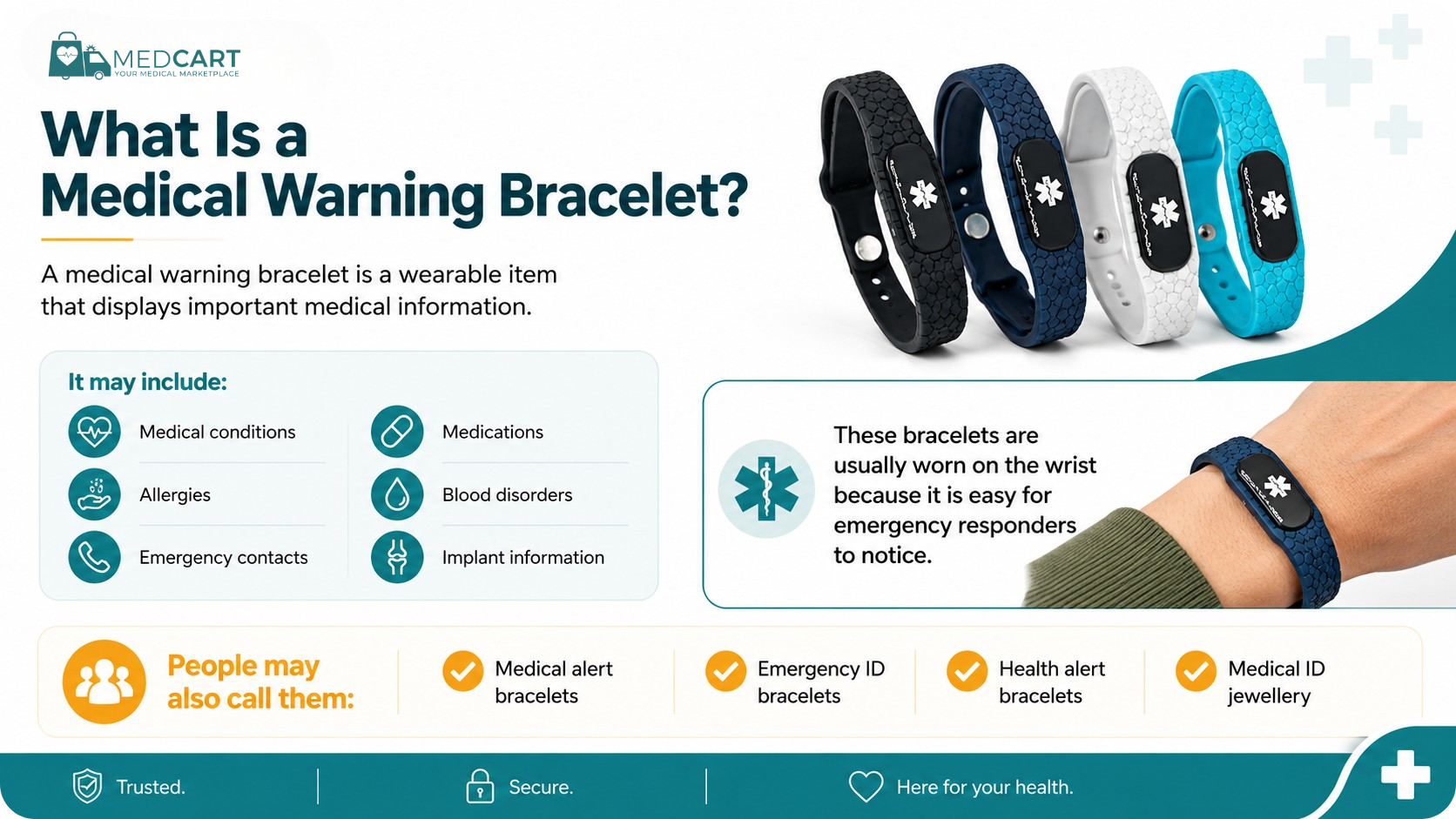
A medical warning bracelet is a wearable item that displays important medical information.
It may include:
- Medical conditions
- Allergies
- Emergency contacts
- Medications
- Blood disorders
- Implant information
These bracelets are usually worn on the wrist because it is easy for emergency responders to notice.
People may also call them:
- Medical alert bracelets
- Emergency ID bracelets
- Health alert bracelets
- Medical ID jewellery
What Conditions Qualify for a Medical Alert Bracelet?
Many different conditions may qualify for a medical warning bracelet. The goal is to share critical health details quickly during an emergency.
Here are some of the most common conditions.
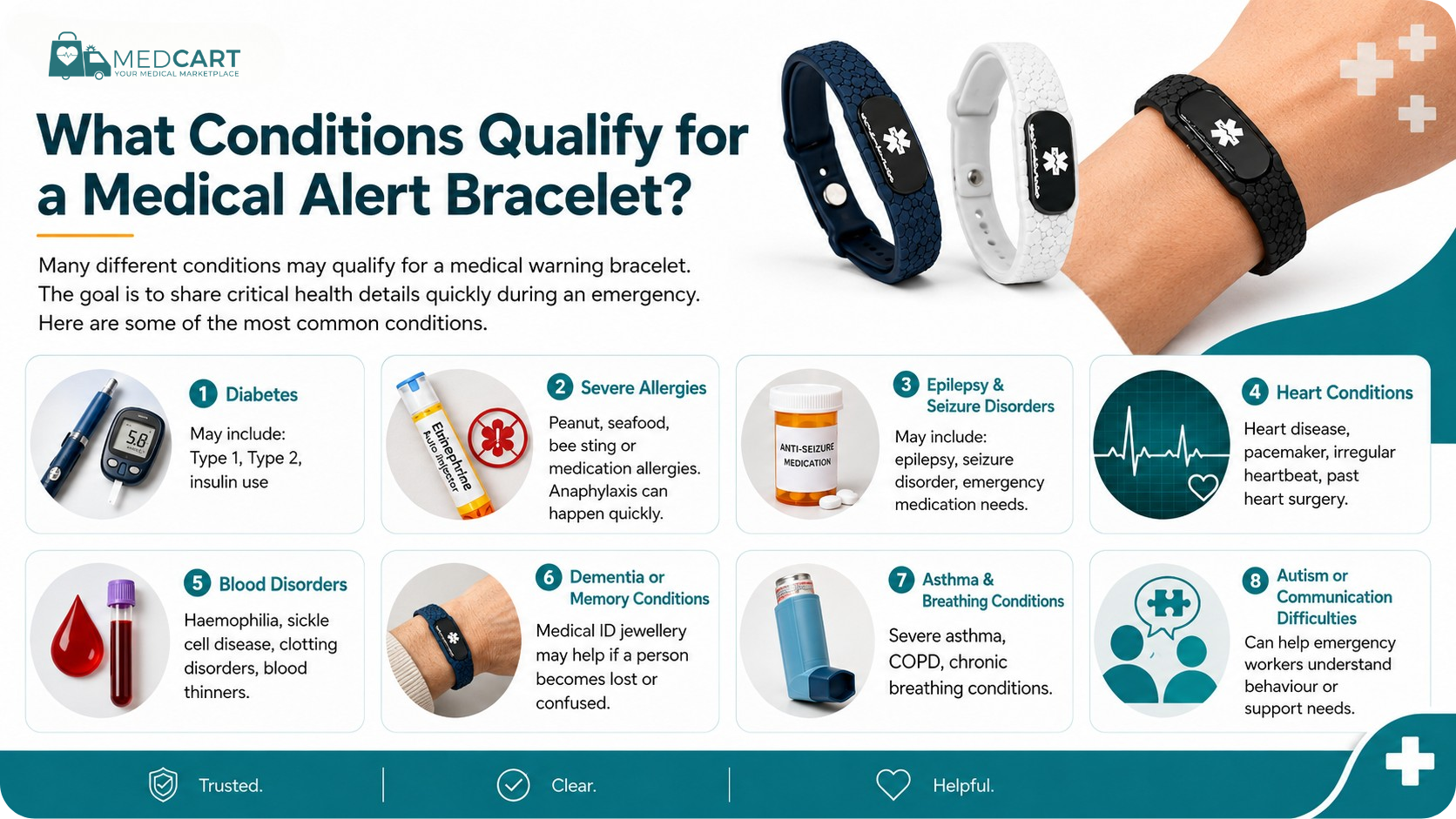
Diabetes
People with diabetes are among the most common users of medical warning bracelets.
Low blood sugar can sometimes cause confusion, fainting, or seizures. A bracelet can help emergency workers identify the condition quickly.
Information may include:
- Type 1 diabetes
- Type 2 diabetes
- Insulin use
According to Diabetes Australia, severe low blood glucose can become a medical emergency if not treated quickly.
Severe Allergies
People with serious allergies may wear medical warning bracelets to help alert others about:
- Peanut allergies
- Seafood allergies
- Bee sting allergies
- Medication allergies
Anaphylaxis can happen quickly. Allergy & Anaphylaxis Australia recommends clear communication of severe allergies in emergency situations.
Epilepsy and Seizure Disorders
A bracelet may help explain why someone is having a seizure. This may reduce confusion and help emergency responders provide proper care.
Common bracelet details include:
- Epilepsy
- Seizure disorder
- Emergency medication needs
Epilepsy Action Australia notes that seizure emergencies sometimes require urgent medical support.
Heart Conditions
Some people with heart conditions choose to wear medical warning bracelets, including those with:
- Heart disease
- Pacemakers
- Irregular heartbeat
- Previous heart surgery
Medical jewellery may help inform emergency responders about devices or treatment needs.
Blood Disorders
People with blood-related conditions may also benefit from wearing a bracelet.
Examples include:
- Haemophilia
- Sickle cell disease
- Blood clotting disorders
- Use of blood thinners
This information may be important before emergency treatment or surgery.
Dementia or Memory Conditions
Some older adults with dementia or memory problems wear medical ID jewellery in case they become lost or confused.
Bracelets may include:
- Name
- Emergency contact
- Memory condition details
Asthma and Breathing Conditions
People with severe asthma or lung conditions may also choose medical alert jewellery.
Examples include:
- Severe asthma
- COPD
- Chronic breathing conditions
Autism or Communication Difficulties
Some people with autism or communication conditions wear medical ID bracelets to help explain communication needs during stressful situations.
This may help emergency workers better understand the person’s behaviour or support needs.
Common Conditions That May Benefit From a Medical Alert Bracelet
What Do Medical Alert Bracelets Do?
Medical alert bracelets provide fast access to important medical information.
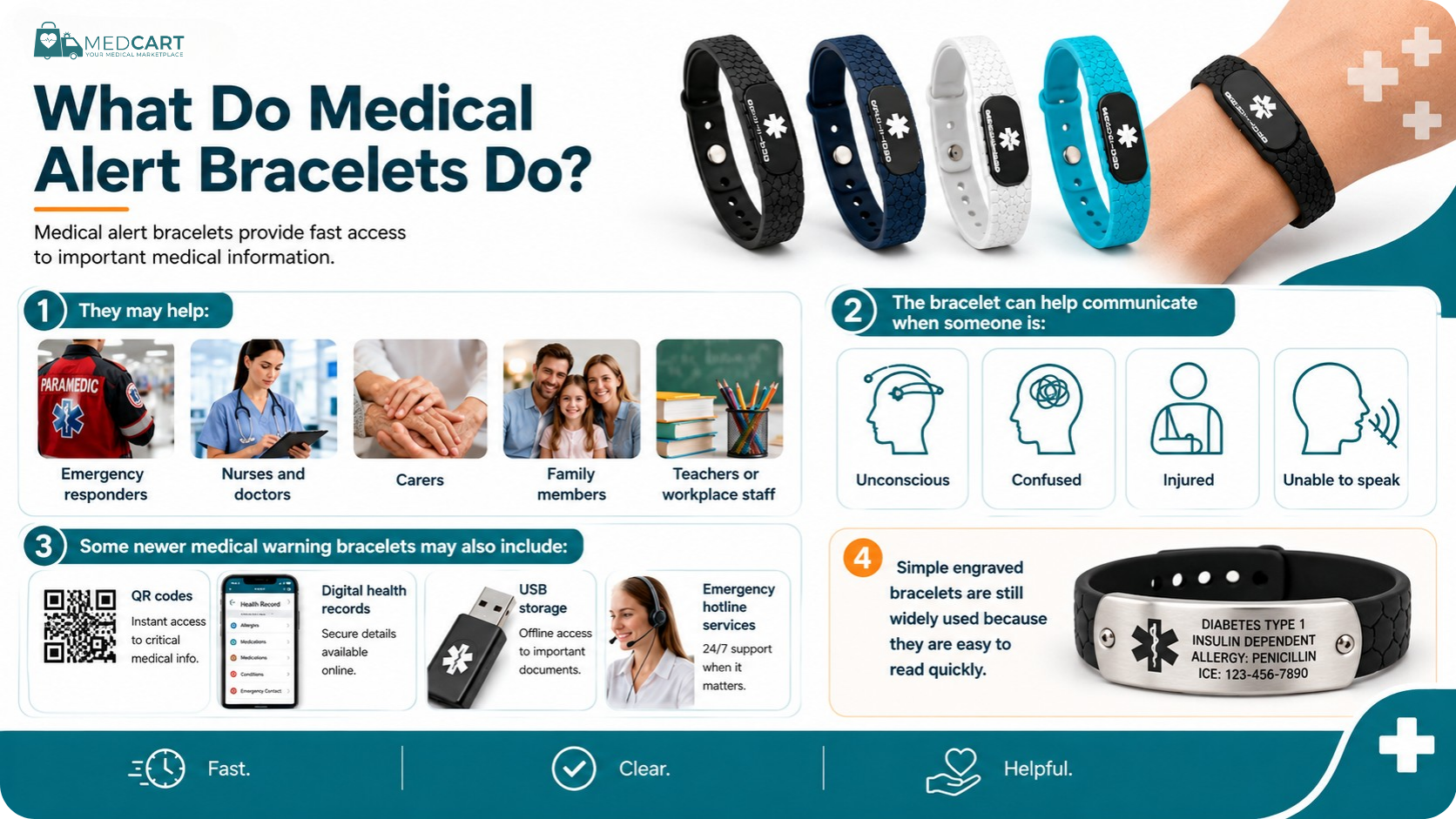
They may help:
- Emergency responders
- Nurses and doctors
- Carers
- Family members
- Teachers or workplace staff
The bracelet can help communicate information when someone is:
- Unconscious
- Confused
- Injured
- Unable to speak
Some newer medical warning bracelets also include:
- QR codes
- Digital health records
- USB storage
- Emergency hotline services
However, simple engraved bracelets are still widely used because they are easy to read quickly.
Which Wrist Should You Wear a Medical Alert Bracelet On?
There is no strict medical rule about which wrist to use.
Most people wear their medical warning bracelet on their non-dominant hand because it may feel more comfortable during daily activities.
For example:
- Right-handed people often wear it on the left wrist
- Left-handed people often wear it on the right wrist
The most important thing is that the bracelet is:
- Easy to see
- Comfortable to wear daily
- Secure on the wrist
Some healthcare groups recommend wearing it consistently so emergency responders can find it quickly.
Which Medical Alert Bracelet Is Best?
The best medical alert bracelet depends on personal needs, comfort, and lifestyle.
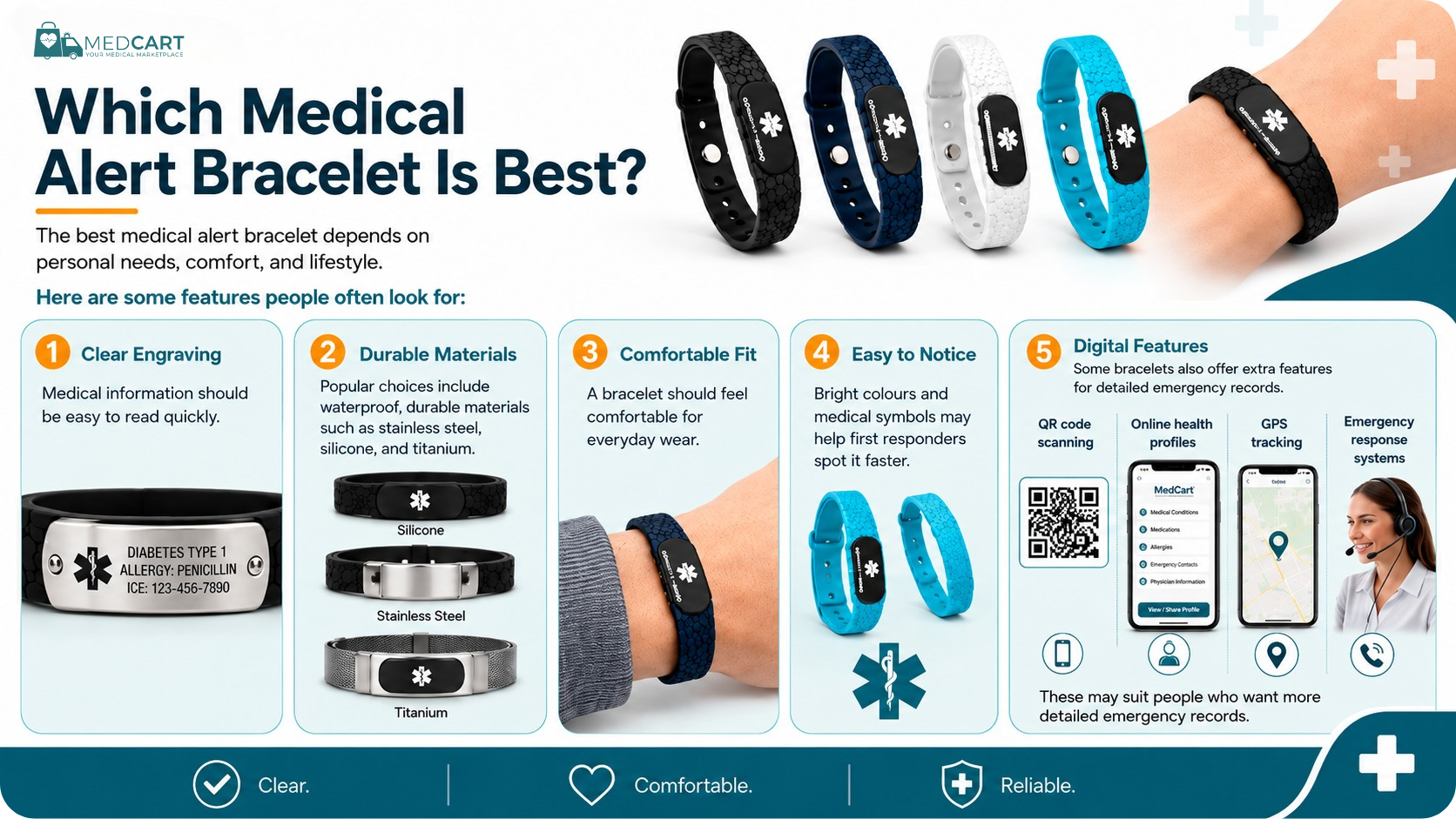
Clear Engraving
The medical information should be easy to read.
Important details may include:
- Medical condition
- Allergies
- Emergency contact
- Medication information
Durable Materials
Many people prefer waterproof and durable materials such as:
- Stainless steel
- Silicone
- Titanium
Comfortable Fit
A bracelet should be comfortable enough for everyday use.
Some people prefer:
- Lightweight silicone
- Adjustable straps
- Sport-style designs
Easy to Notice
Bright colours or medical symbols may help first responders identify the bracelet faster.
Digital Features
Some modern medical warning bracelets offer:
- QR code scanning
- Online health profiles
- GPS tracking
- Emergency response systems
These may suit people who want more detailed emergency records.
Who May Benefit From Medical Warning Bracelets?
Medical warning bracelets may help:
- Children
- Older adults
- People with chronic illness
- People with allergies
- Athletes
- Travellers
- People living alone
Some workplaces and schools also encourage medical ID jewellery for safety reasons.
Tips for Choosing a Medical Warning Bracelet
Before buying a bracelet, consider:
- Your medical needs
- Bracelet comfort
- Water resistance
- Easy-to-read engraving
- Everyday wear suitability
It may also help to speak with your doctor about what information should be included.
Where to Buy Medical Warning Bracelets
You can browse a range of medical warning bracelets and emergency ID products at MedCart Australia.
Explore the collection here:
Medical Alert Bracelets Collection
MedCart Australia offers a wide range of healthcare, medical, wellness, and lifestyle products from trusted sellers across Australia.
References
- Diabetes Australia
- Allergy & Anaphylaxis Australia
- Epilepsy Action Australia
- Australian Commission on Safety and Quality in Health Care
- Healthdirect Australia