

Several pieces of equipment work together to help collect a blood sample safely and accurately. The exact supplies may vary depending on the collection method and the type of test requested.
Common blood collection equipment includes:
- Blood collection needles
- Butterfly needles (winged infusion sets)
- Multi-sample needles
- Syringes (when appropriate)
- Needle holders (tube holders)
- Blood collection tubes
- Tourniquets
- Alcohol swabs
- Sterile gauze
- Cotton balls
- Adhesive dressings or bandages
- Medical gloves
- Sharps containers
- Specimen labels
- Biohazard transport bags
According to the World Health Organization (WHO) and the Clinical and Laboratory Standards Institute (CLSI), using the correct equipment and following proper collection procedures may help reduce specimen errors and improve sample quality.
What Is Included in a Blood Collection Kit?
A blood collection kit is designed to provide many of the essential items needed for a blood draw in one convenient package.
The contents can vary depending on the manufacturer and intended use, but a typical blood collection kit may include:
- Sterile blood collection needle
- Tube holder
- Blood collection tubes
- Tourniquet
- Alcohol swab
- Sterile gauze
- Adhesive dressing or bandage
- Disposable gloves (in some kits)
- Labels or documentation
- Specimen transport bag
Some specialised kits may also include safety-engineered devices that help reduce the risk of needlestick injuries.
Blood collection kits are commonly used in:
- Hospitals
- Medical clinics
- General practice
- Pathology collection centres
- Aged care facilities
- Occupational health services
- Community healthcare
- Mobile pathology services
What Are Blood Collection Tubes Used For?
Blood collection tubes are specially designed containers that hold the blood sample after collection.
Different tubes contain different additives, depending on the laboratory test being performed.
Examples include:
- Tubes with clot activators
- EDTA tubes
- Sodium citrate tubes
- Lithium heparin tubes
- Fluoride oxalate tubes
Each additive helps preserve the blood sample for specific laboratory testing.
Using the correct tube helps ensure the laboratory receives a suitable specimen for analysis.
Why Are Different Coloured Blood Collection Tubes Used?
Many blood collection tubes have colour-coded caps.
The colour identifies the additive inside the tube and helps healthcare professionals select the appropriate tube for each test.
Examples include:
- Purple (EDTA)
- Blue (Sodium Citrate)
- Green (Heparin)
- Grey (Fluoride Oxalate)
- Gold or Yellow (Serum Separator Tube)
- Red (Plain Serum Tube)
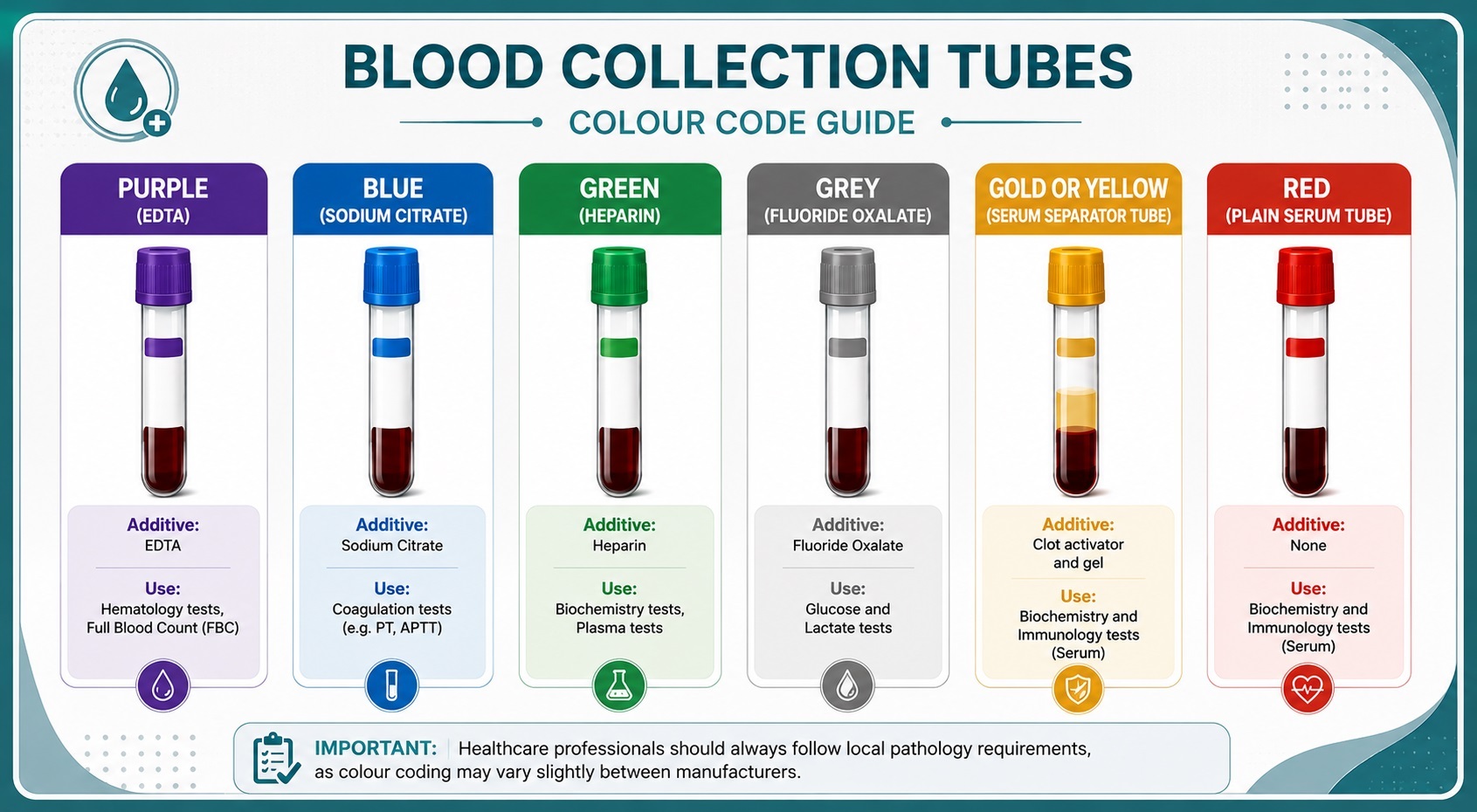
Healthcare professionals should always follow local pathology requirements, as colour coding may vary slightly between manufacturers.
What PPE Should Be Worn During Blood Collection?
Personal Protective Equipment (PPE) helps reduce exposure to blood and body fluids.
According to infection prevention guidance, healthcare workers may wear:
- Disposable examination gloves
- Protective eyewear when splash risk exists
- Surgical mask if appropriate
- Protective gown when required
Hand hygiene should be performed before and after every blood collection procedure.
Are Blood Collection Needles Single Use?
Yes.
Blood collection needles are intended for single-patient, single-use only.
Reusing needles increases the risk of infection and needlestick injuries.
Used needles should be disposed of immediately into an approved sharps container without recapping whenever possible.
What Is a Butterfly Needle?
A butterfly needle, also called a winged infusion set, is a smaller blood collection needle with flexible tubing.
Healthcare professionals may choose butterfly needles for patients with:
- Small veins
- Fragile veins
- Difficult venous access
- Paediatric patients
- Older adults
The choice of needle depends on the patient's needs and the clinician's judgement.
Why Is a Tourniquet Used During Blood Collection?
A tourniquet is placed around the upper arm before venepuncture.
It gently slows blood flow in the veins, making them easier to locate and access.
Current guidelines recommend avoiding prolonged tourniquet application because extended application may affect some laboratory test results.
Can Blood Collection Equipment Be Reused?
Many blood collection items are designed for single use only.
Examples include:
- Needles
- Syringes
- Butterfly sets
- Alcohol swabs
- Gauze used during the procedure
Some non-invasive items, such as reusable tourniquets, may be cleaned or replaced according to facility infection control policies.
Healthcare facilities should always follow their local infection prevention guidelines.
How Should Blood Collection Equipment Be Stored?
Blood collection supplies should generally be stored:
- In a clean environment
- Away from moisture
- Away from excessive heat
- In original packaging until use
- According to the manufacturer's instructions
Products should be checked regularly for expiry dates and package integrity.
Blood Collection Equipment Checklist
Whether you are preparing a clinic, pathology service, workplace medical room, or healthcare facility, this checklist can help ensure you have the essential blood collection supplies available.
- ✔ Blood collection needles
- ✔ Butterfly needles
- ✔ Needle holders
- ✔ Blood collection tubes
- ✔ Tourniquets
- ✔ Alcohol swabs
- ✔ Sterile gauze
- ✔ Adhesive dressings
- ✔ Medical gloves
- ✔ Sharps containers
- ✔ Biohazard specimen bags
- ✔ Labels
- ✔ Blood collection kits
Keeping a well-stocked supply area may help support efficient specimen collection and reduce interruptions during patient care.
Where to Buy Blood Collection Equipment
Choosing quality blood collection equipment is important for healthcare settings where reliability, safety, and product consistency matter.
Whether you're purchasing supplies for a hospital, medical clinic, pathology collection centre, aged care facility, workplace health program, or first aid room, having the right products available helps support everyday clinical practice.
At MedCart Australia, you'll find a wide range of blood collection supplies from trusted healthcare brands, including:
- Blood Collection Kits
- Blood Collection Needles
- Butterfly Needles
- Blood Collection Tubes
- Tourniquets
- Alcohol Swabs
- Gauze and Dressings
- Examination Gloves
- Sharps Containers
- Specimen Collection Accessories
- Pathology Consumables
Shopping through MedCart Australia allows healthcare professionals and organisations to source many essential medical consumables from one convenient marketplace.
Conclusion
Blood collection involves more than just a needle and a tube. A complete collection process uses several carefully selected pieces of equipment that work together to support specimen quality, patient comfort, and workplace safety.
From tourniquets and alcohol swabs to specialised blood collection tubes and sharps containers, every item has an important role in the procedure.
Understanding what each piece of equipment is used for can help healthcare workers, students, clinics, and organisations make informed purchasing decisions and maintain well-equipped medical facilities.
Whether you're stocking a healthcare practice or expanding your pathology supplies, choosing reliable blood collection products from trusted suppliers can help support efficient day-to-day clinical operations.
References
The information in this article is based on guidance and educational resources from reputable organisations, including:
- World Health Organization (WHO). WHO Guidelines on Drawing Blood: Best Practices in Phlebotomy.
- Clinical and Laboratory Standards Institute (CLSI). Collection of Diagnostic Venous Blood Specimens.
- Australian Commission on Safety and Quality in Health Care. Infection prevention and control resources.
- NSW Health. Infection Prevention and Control Practice Handbook.
- Healthdirect Australia. Health information on blood tests and pathology services.
- Centers for Disease Control and Prevention (CDC). Injection Safety and Standard Precautions.
- Australian Government Department of Health and Aged Care. Infection prevention guidance.